







Hampton Roads Real Estate Blog & Local Market Insights
Written by John King, a U.S. Navy veteran and Berkshire Hathaway HomeServices RW Towne Realty REALTOR® with 441 closings across Hampton Roads, this library covers what buyers, sellers, and military families actually need to know about real estate in Virginia Beach, Norfolk, Chesapeake, and the surrounding 757.
Explore more than 200 original Hampton Roads real estate articles covering local neighborhoods, military PCS moves, VA loan strategy, home selling, waterfront property, market trends, and home buying — lessons drawn from more than 13 years of local transactions, not syndicated content.
Every guide is organized by topic below. Start with the cornerstone resources, browse a cluster, or scroll to the newest articles.
Start here
Start with these six cornerstone resources, then explore the supporting guides below.


Latest Hampton Roads Real Estate Articles
New guides and market updates are added every week. Newest first.
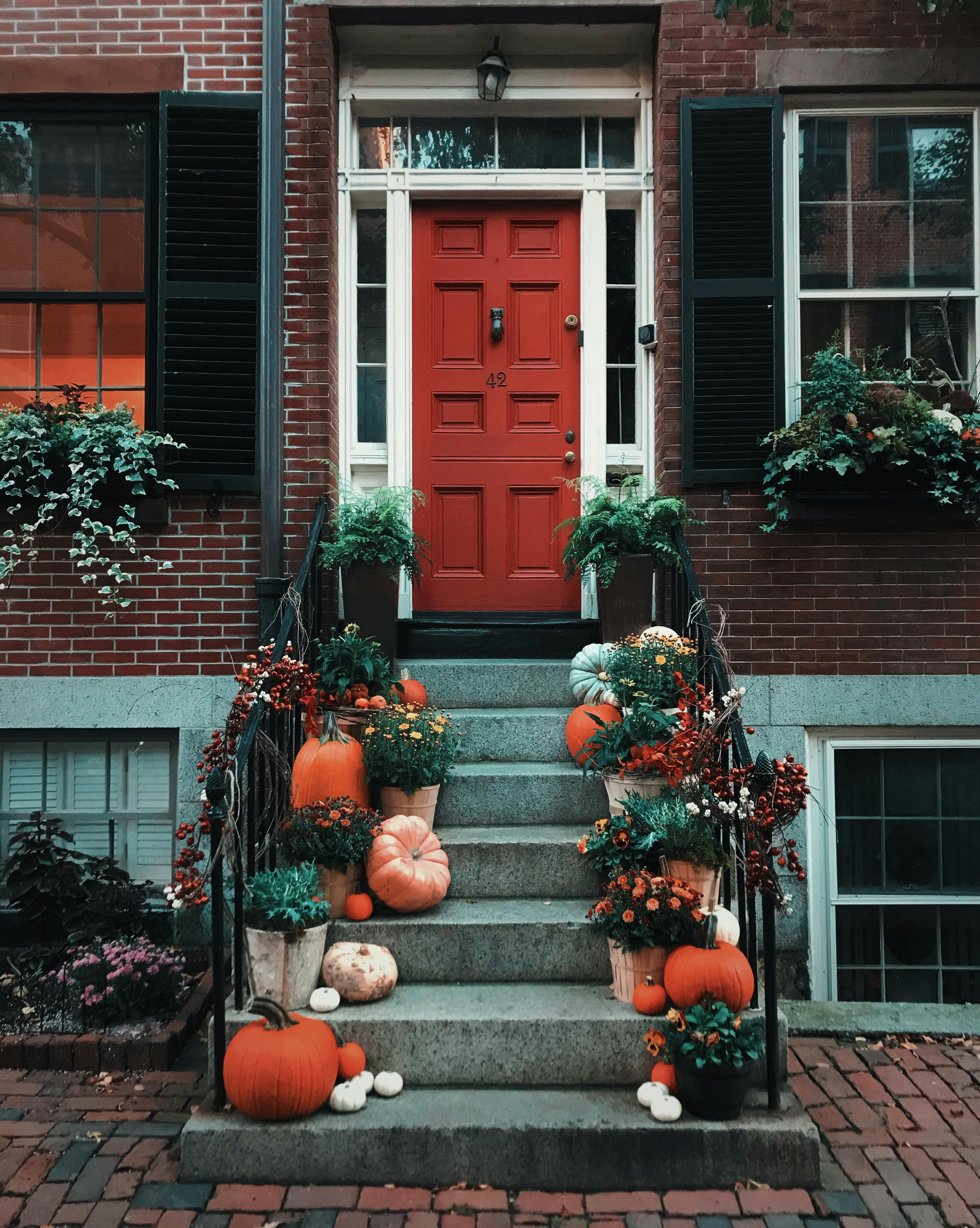
Selling a Home in Hampton Roads This Fall and Winter
Most sellers I talk to in September want to know the same thing.
Should I list now, or wait until spring?
The answer for most of them is not "wait." It is that fall and winter in Hampton Roads look nothing like sellers assume they do. Inventory drops. Casual browsers disappear. But the buyers who are actively shopping in October, November, December, and January are some of the most decisive, well-qualified buyers I see all year. And when a home is properly prepared and priced, it sells timely, often with less competition, and often at a stronger number than the same home would produce in a crowded spring market.
Here is what my 13 years of Hampton Roads closings actually show about the slow season, and why waiting for April is usually the wrong call.
The Seasonality Myth
Spring dominates Hampton Roads real estate. That part is true. Across the board, more homes list, more homes sell, and more buyers shop between March and June than any other time of year. If you rank the months by pure volume, April, May, and June sit at the top and October, November, and December sit near the bottom.
But volume is not the same thing as opportunity. And opportunity is what sellers actually care about.
A high-volume month means more inventory. More competition. More sellers chasing the same buyers. In the peak of spring, your home is one of hundreds of active listings buyers are considering in the same neighborhood, in the same price band, in the same week. The buyer pool is deeper, but so is the seller pool. And a distracted, overwhelmed buyer is not always the buyer you want when it comes time to negotiate.
A low-volume month is the opposite. Fewer new listings. Less noise. And a buyer pool that has been filtered down to the people who genuinely need to buy right now. Those buyers do not tour aimlessly. They do not spend six weekends comparing. They write offers.
That is the setup fall and winter sellers walk into. Less competition. More serious buyers. And a market that rewards a well-prepared home more than it rewards a well-timed one.
Who Is Actually Shopping in the Fall and Winter
The buyer pool from October through February in Hampton Roads breaks down into a handful of distinct groups, and every one of them is a strong buyer.
Military relocations and PCS families. Hampton Roads has seven military installations and a constant rotation of families arriving on orders. PCS moves do not stop for winter. Some of the most active PCS buyer periods run through the fall and winter, especially November through February for spring reporting dates and January through March for summer PCS windows. These are pre-approved, decisive, deadline-driven buyers.
Executives and professionals on career moves. Job changes do not follow the school calendar. The buyer who accepted a new position starting in January is house-hunting in October. The company relocation happening in February started shopping in November. These buyers are typically well-qualified, financially prepared, and moving on a timeline that does not allow for spring shopping.
Serious luxury buyers. The Hampton Roads luxury market is quieter in the fall and winter, but the buyers who are actively shopping are the ones who have identified a specific neighborhood, a specific price band, and are ready to move when the right home appears. Fewer luxury buyers, but the ones who are looking are the ones you want.
Buyers who missed spring. Some buyers spent the peak season getting outbid, losing homes to multiple-offer situations, or waiting for their financing to firm up. By fall, they are ready, pre-approved, and motivated to close on a home before the holidays or before the new year.
Year-end tax and financial planning buyers. A subset of buyers close intentionally before December 31 for financial reasons. These buyers work backward from a closing date and move fast to hit it.
Every one of these buyers is more decisive than the average spring shopper. They do not have time to browse. They have a reason to buy, a timeline to hit, and an offer to write.
Why Less Inventory Can Be a Seller Advantage
When inventory drops, the competitive dynamic shifts in the seller's favor in ways that most sellers do not see coming.
Your home has less competition. In a crowded spring market, your home is competing against 15 or 20 similar listings in your neighborhood. In November, that number might be 4 or 5. The math of getting your home noticed changes significantly.
Buyers cannot afford to wait. In peak inventory, a buyer who likes your home can spend the weekend touring three other homes before writing an offer. In lower inventory, a buyer who likes your home may not have three other options to compare it to, and knows it. That produces stronger offers, faster.
Bidding pressure works differently. Fall and winter bidding is quieter but often more decisive. Two committed buyers competing for a well-priced home in November can drive a stronger outcome than five casual buyers hedging in May.
Presentation carries more weight. Because there are fewer listings, a well-prepared home stands out more. Great photography, tight staging, and a home that shows well against the fall or winter backdrop gets disproportionate attention from the serious buyer pool.
The seller who understands this and prepares accordingly walks into the slow season with real leverage, not against it.
The Trade-Offs Sellers Should Understand
The fall and winter market is not identical to the spring market, and the sellers who do best are the ones who go in eyes open about the differences.
Pricing has to be right. Fall and winter buyers do not tolerate ambitious pricing. In a market with fewer buyers, an overpriced home does not just sit. It signals a problem and gets skipped. The pricing accuracy discussion in my seller's guide matters more in November than it does in April. Price it to comparable recent sales in your neighborhood, not to what your neighbor got two years ago.
Presentation matters more. Gray skies, bare trees, and shorter daylight hours mean the outside of your home photographs differently in November than in May. Professional photography, ideally done while the yard still has some color, is a real asset. Interior staging that leans warm and inviting matters more when a buyer is walking in from cold rain than when they are strolling in on a sunny Saturday. And the little details of a home, clean fireplace, warm lighting, seasonally appropriate touches, land harder in the fall and winter than they do in spring.
Buyer timelines can compress. A fall or winter buyer often needs to close by a specific date, whether it is a PCS report date, a job start, a school semester, or a tax year end. That can work in the seller's favor, but it also means being ready to move quickly through inspections, appraisal, and closing. A well-prepared home and a responsive seller make this a strength. A slow-moving process makes it a problem.
Weather affects showings. Rainy weekends slow foot traffic. A home that is easy to show on short notice, in any weather, wins in the fall and winter market. Sellers who are flexible on showing times and who have prepared the home for last-minute visits capture more of the smaller buyer pool.
What Waiting for Spring Actually Costs
Waiting is not free. If you are ready in October and hold out until May, that is seven months of mortgage payments, property taxes, insurance, utilities, and upkeep. At an illustrative $3,000 a month, that is about $21,000 before anything else changes. Meanwhile, rates can rise, new listings can pile up, and prices can shift, and a 2 percent price dip on a $360,000 home is another $7,200. Seasonal averages do not erase those costs, which is why the best time to sell is usually when you are financially ready or need to move.
What a Properly Prepared Fall or Winter Listing Looks Like
Every seller listing in October, November, December, or January should be doing the same core things:
Professional exterior photography, ideally shot while the yard has color, saved and used throughout the winter listing period
Interior staging that emphasizes warmth, light, and a lived-in feel
Working, clean, and safe fireplaces if the home has them, and clear evidence of a well-maintained HVAC system
Fresh interior paint where needed and cleaner-than-usual attention to interior lighting
The same pre-listing preparation any Hampton Roads seller should do to clear the appraisal cleanly, addressing paint, wood rot, roof condition, handrails, and moisture items before the sign goes in the yard
Flexible showing windows and a home that is ready for a same-day showing request
Honest, decisive pricing calibrated to the current market, not to a memory of what neighbors got in a different one
The seller who does all of this in September or early October and lists mid-October is set up for a strong outcome in a season when most of the other listings are not.
How This Applies at Every Price Point
Entry-level sellers benefit from fall and winter listing because the buyer pool tilts toward decisive PCS and relocation buyers who need to close quickly. If you have done the pre-listing prep work that clears a clean VA or FHA appraisal, your home is going to close on a fast timeline. Neighborhoods like Kempsville, Ocean View, Bayview, Suburban Acres, and Pinehurst all see steady fall and winter activity driven by military relocations from Naval Station Norfolk and the surrounding installations.
Mid-tier sellers benefit from lower competition and more decisive buyers. In neighborhoods like Great Neck, Chic's Beach, Bay Island, and Cape Story by the Sea, a well-prepared and well-priced fall listing often closes with less back-and-forth and less carrying time than the same listing would see in a spring market flooded with alternatives.
Luxury sellers benefit most from the quieter market, because the buyers who are shopping in premium neighborhoods in November and December are serious, financially prepared, and specifically looking. Across Alanton, Bay Colony, Princess Anne Hills, the North End, Larchmont and Edgewater, Lochaven, Ghent, and West Freemason, correctly priced homes in the fall and winter draw decisive buyers who are not competing with dozens of other listings for attention. The Shore Drive corridor and bayfront condominium buildings like Cape Henry Towers, Chesapeake House, and Harbour Gate see the same pattern.
When Waiting for Spring Actually Makes Sense
For most sellers, the answer to "should I list now or wait" is list now. There are a few honest exceptions.
If your home needs significant repair work that will not be complete until spring, waiting to list until the home is ready is the right call. A fall listing of a home that is not ready is worse than a spring listing of the same home done right.
If your neighborhood has very thin winter buyer traffic and the home is in a hyper-specific niche (a very high-end waterfront estate, for example, where the buyer pool is measured in dozens rather than hundreds), a strategic spring launch may better fit the property.
If your personal timeline is not urgent and you have a clear reason to prefer a spring closing, waiting is fine, but understand you will be listing into a much more competitive field.
Outside of those exceptions, the fall and winter market is a real market, with real buyers, and homes prepared and priced correctly sell timely and at strong numbers.
Let's Talk About Your Fall or Winter Listing
If you are thinking about selling in Hampton Roads and you want a straight read on whether your specific home should list this fall or wait until spring, let's have that conversation.
I will walk your property, tell you honestly what the fall and winter buyer pool for your price band and neighborhood actually looks like, run the numbers against current comparable sales, and give you a real recommendation on timing, preparation, pricing, and positioning. No script. No pressure to list before you are ready. Just a straight read on what the market is doing right now and how your home fits into it.
The full 13-year record is on my site if you want to review the data before we talk. Everything referenced in this article comes directly from it.
Related Reading
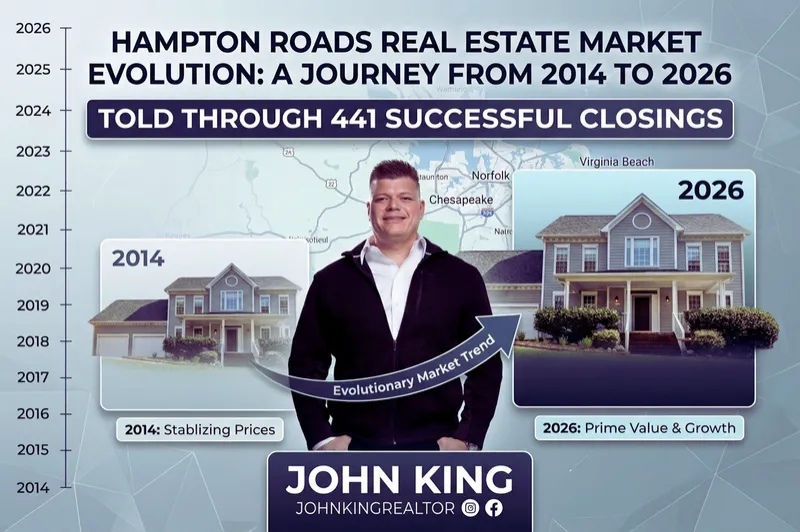
Four Eras, Same Agent: How the Hampton Roads Real Estate Market Rewrote Itself Between 2014 and 2026
Why Entry-Level Homes Close Slower in Hampton Roads (And How Sellers Can Fix It)
About the Author
John King is a U.S. Navy veteran and licensed Realtor with Berkshire Hathaway HomeServices RW Towne Realty, serving Hampton Roads including Virginia Beach, Norfolk, and Chesapeake. A designated Luxury Collection Specialist with 441 closings and over 13 years of local experience, he is known for a strategic, data driven approach to marketing homes and a straightforward, veteran's approach to his clients.
📱 757-270-3994
📧 [email protected]
🌐 www.757King.com
▶️ Hampton Roads Living on YouTube
Curious what your home is worth in today's market? Get a free home valuation and find out where you stand.
Related guides from John King
Written by John King, Navy veteran & REALTOR®, Berkshire Hathaway HomeServices RW Towne Realty · (757) 270-3994 · About John

Why these guides are different
Every article here is written by one local agent from his own transaction record, not by a content farm. The numbers below are the basis for the advice.

John King is a former Navy Machinist Mate and a licensed Virginia REALTOR® with Berkshire Hathaway HomeServices RW Towne Realty in Virginia Beach. Licensed since 2013, he has logged 441 closings across Virginia Beach, Norfolk, Chesapeake, Suffolk, Hampton, and Newport News, and specializes in military PCS relocation, VA loans, and waterfront property. He holds a 5.0 Google rating across 117 reviews and has earned the HRRA Circle of Excellence every year since 2015.
About John King See the transaction studyCommon questions about this library
Tap a question to expand it.
What is the Hampton Roads Real Estate Blog?
Which Hampton Roads neighborhoods are closest to each base?
How do VA loans work when buying in Virginia Beach or Norfolk?
What is the Hampton Roads real estate market like right now?
Should I buy or rent during a PCS to Hampton Roads?
Ready to talk about your move?
Reading is a good start. A 15-minute conversation with a local agent who has logged 441 closings in Hampton Roads is a better one.
Prefer to talk? Call or text John at (757) 270-3994.

441 Closings
Client-side closings across Hampton Roads since 2014.

189 VA-Financed Sales
Direct experience with military and veteran buyers.

270 Subdivisions
Experience spread across the whole region.

FOLLOW US


COMPANY
CUSTOMER CARE
LEGAL
Copyright 2026 John King | KingRealtor757. All Rights Reserved. Equal Housing Opportunity. REALTOR(R). Virginia License 0225211050.