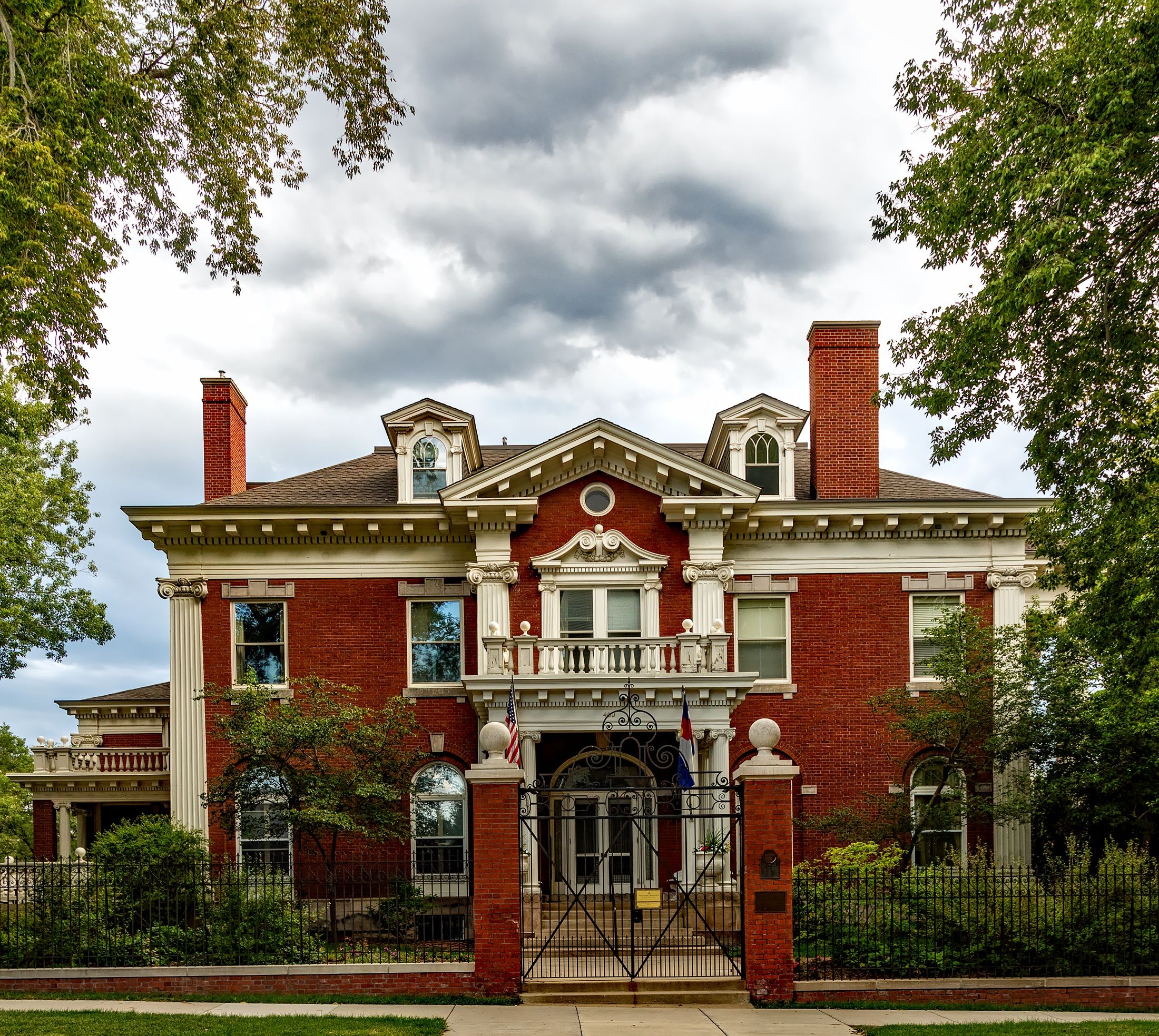
Ghent, Norfolk: Historic Homes and the Iconic Hague
Ghent is Norfolk's first planned suburb and its most iconic historic neighborhood, a walkable district of grand early twentieth century homes, tree lined avenues, and a scalloped waterfront known as The Hague. Home to some of the largest and most elegant houses in the city, along with a vibrant mix of condominiums, shops, restaurants, and cultural institutions, Ghent anchors the top of Norfolk's historic real estate market. This is the pillar post in our guide to the Ghent District, which also includes West Ghent and Ghent Square.
Norfolk's First Planned Suburb
Before it was Ghent, this was farmland known as Pleasant Point, on the banks of the Elizabeth River just west of the growing city. Its name comes from one of the more storied chapters in Norfolk history, and it traces to the Treaty of Ghent, the agreement signed in Ghent, Belgium, in December 1814 that ended the War of 1812.
Two versions of the naming story have come down through the years. In one, a landowner named Jasper Moran, who held the property in the early 1800s, named his estate Ghent to honor the peace treaty. In the other, Commodore Richard Drummond, who acquired the farmland in the 1830s, chose the name because one of his ships had carried the signed treaty back across the Atlantic to America. Drummond Place in the neighborhood still bears his name. Either way, the name stuck.
The transformation from farmland to fashionable suburb began in 1890, when a group of prominent investors chartered the Norfolk Company and set out to build Norfolk's first planned residential suburb. They hired John Graham, a civil engineer from Philadelphia, to design it, and they connected it to the city by streetcar. The plan called for broad avenues lined with trees, generous green space, and building lots for grand single family homes. Most of Ghent was built between 1892 and 1907, and the neighborhood was largely complete by the late 1920s.
The Dutch Vision and The Hague
Ghent's most distinctive feature owes its existence to two Dutchmen. J.P. Andre Mottu, who immigrated from the Netherlands in 1890, worked for the Norfolk Company alongside the investor Adolphe Boissevain. Drawn to the waterfront and inspired by their homeland, the two envisioned a district modeled on the canals of the Netherlands.
They filled the marshlands along Smith's Creek and reshaped the shoreline into a graceful semicircular curve meant to echo Dutch canals. In 1897, they christened the waterway The Hague, after the city in South Holland. The arching street that traces its bank became Mowbray Arch, and it quickly emerged as the single most prestigious address in the neighborhood, lined with the stately homes of Norfolk's leading citizens. More than a century later, Mowbray Arch and The Hague remain the visual and emotional heart of Ghent.
A Showcase of Architecture
Ghent was built without the rigid design rules of a modern planned community, and the result is one of the richest and most varied collections of period architecture in Virginia. Because homeowners built to their own tastes, the streets display an eclectic mix of styles, Colonial Revival, Queen Anne, Georgian Revival, Shingle Style, Tudor, Spanish influenced, and Victorian among them, generally rising to a uniform scale of two and a half stories and built of brick. The largest and most elaborate homes went up along Mowbray Arch and Colonial Avenue, some of them among the grandest houses in the city.
In 1980, Ghent was listed on the National Register of Historic Places, recognizing a neighborhood that, developed in less than two decades, achieved a rare consistency of well designed architecture set within an attractively landscaped environment.
Decline and Renewal
Ghent's story includes a difficult middle chapter. During the housing shortage of the Second World War, many of its large homes were subdivided into apartments and boarding houses, and in the decades that followed, as families moved toward newer suburbs, parts of the neighborhood fell into disrepair.
The turnaround was deliberate and sustained. Beginning in the late 1950s, the development of the medical complex to the east brought new investment to the area. In 1969, The Hague and its surrounding blocks were declared a conservation area, and a historical review board was created to ensure that new construction respected the neighborhood's architectural character. The City of Norfolk and the Norfolk Redevelopment and Housing Authority invested through the 1960s and 1970s to rehabilitate homes and reverse the decline, and on the site of razed blocks in East Ghent, the upscale planned community of Ghent Square was developed. Over the course of a generation, Ghent was brought back, and today it stands as one of the most desirable addresses in the city.
Life in Ghent Today
Ghent is a genuinely walkable, mixed use neighborhood, and that is much of its appeal. Colley Avenue and 21st Street form its commercial spine, lined with independent restaurants, shops, and cafes, including the renovated Palace Shops and the historic Naro Expanded Cinema. The Chrysler Museum of Art sits at the neighborhood's southern edge, and Stockley Gardens, a linear park in the heart of Ghent, hosts the beloved Stockley Gardens Arts Festival each spring and fall. Nearby on Monticello Avenue, Doumar's has been serving barbecue and ice cream cones since 1934, on the site where the machine to make the waffle cone was invented.
Ghent also adjoins one of the region's most important medical centers, home to a level one trauma center, a major hospital system, and a medical school. The greater Ghent District includes not only historic Ghent but also West Ghent and Ghent Square, each with its own character, which we cover in their own posts.
One honest note about life on The Hague: as a low lying coastal neighborhood, Ghent contends with tidal flooding and sea level rise, and the city has undertaken resilience and flood mitigation efforts in the area. It is part of the reality of owning near the water here, and a knowledgeable approach accounts for it.
The Ghent Market
Ghent is one of Norfolk's most diverse markets in both architecture and price, and understanding that range is the key to understanding it. At one end, the neighborhood offers an unusually deep supply of historic condominiums and apartments, many carved from early twentieth century buildings, that trade broadly from the low hundreds into the mid hundreds of thousands. This is part of what keeps Ghent vibrant and walkable, a real mix of housing in one historic setting.
The luxury tier sits at the other end, in the grand single family homes. Current listings of the neighborhood's stately historic houses run from the high five hundred thousands into seven figures, with the homes along Mowbray Arch overlooking The Hague and the largest historic mansions setting the ceiling. At the very top, a grand home from 1892 on Pembroke Avenue, with more than seven thousand square feet, has been offered at one million nine hundred thousand dollars. These are the architecturally significant, irreplaceable homes that define the upper end of the Ghent market.
What This Means for Sellers
Ghent rewards a seller who understands its range, because a home here could be a compact historic condominium, a restored Colonial Revival, or a seven figure mansion on The Hague, and those are entirely different products reaching entirely different buyers. Pricing and marketing each one correctly requires knowing exactly where it fits.
At the top of the market especially, the grand historic homes are individual and, in many cases, irreplaceable, and true comparable sales are scarce. Pricing one is not a matter of averaging the neighborhood, because the neighborhood spans an enormous range. It is a matter of understanding what makes a specific home rare, whether its architecture, its history, or its position on The Hague, pricing it accordingly, and presenting it to the narrow pool of buyers who are seeking exactly that. That is the work a Luxury Collection Specialist brings to a Ghent listing.
Key Facts: Ghent at a Glance
Location: Norfolk's first planned suburb, west of downtown along the Elizabeth River, bounded by The Hague and Brambleton Avenue to the south and Monticello Avenue to the east
Origins: Built on farmland once called Pleasant Point, named for the 1814 Treaty of Ghent, and developed by the Norfolk Company beginning in 1890, with most homes built between 1892 and 1907
The Hague: The neighborhood's scalloped waterfront, created by filling marshland along Smith's Creek and renamed The Hague in 1897 in honor of the developers' Dutch roots, with Mowbray Arch as its signature address
Architecture: An eclectic collection of Colonial Revival, Queen Anne, Georgian, Tudor, and Victorian homes, listed on the National Register of Historic Places in 1980
Culture: Home to the Chrysler Museum of Art, Stockley Gardens and its arts festival, the Naro Cinema, and the Colley Avenue and 21st Street shopping and dining districts
Market as of 2026: A wide range, from historic condominiums and apartments in the low to mid hundreds of thousands to grand single family homes, with the luxury tier of historic houses and Mowbray Arch homes reaching from the high five hundred thousands past one and a half million dollars
Frequently Asked Questions
Where is Ghent in Norfolk?
Ghent is a historic neighborhood just west of downtown Norfolk, along the Elizabeth River. Its southern edge is defined by The Hague and Brambleton Avenue, with Monticello Avenue to the east. The greater Ghent District also includes West Ghent and Ghent Square.
How did Ghent get its name?
Ghent is named for the Treaty of Ghent, signed in Ghent, Belgium, in 1814 to end the War of 1812. By tradition, the name was given either by landowner Jasper Moran or by Commodore Richard Drummond, whose ship was said to have carried the treaty back to America.
What is The Hague in Ghent?
The Hague is the scalloped tidal waterway at the southern edge of Ghent. The neighborhood's Dutch developers filled the marshland along the former Smith's Creek, shaped the shoreline into a semicircular curve to evoke the canals of the Netherlands, and renamed it The Hague in 1897. The homes along Mowbray Arch overlook it.
What kinds of homes are in Ghent?
Ghent offers an unusually wide range, from historic condominiums and apartments to grand single family homes in styles including Colonial Revival, Queen Anne, Georgian, Tudor, and Victorian. The largest and most elaborate homes line Mowbray Arch and Colonial Avenue.
How much do homes in Ghent cost?
Ghent spans a broad range. Historic condominiums and apartments generally trade from the low into the mid hundreds of thousands, while the luxury tier of grand single family homes runs from the high five hundred thousands past one and a half million dollars, with the finest mansions and Mowbray Arch homes at the top. A professional market analysis is the best way to value a specific home.
Thinking about making a move here? Start with how I guide Hampton Roads buyers, proven across the 13 year Hampton Roads transaction study.
Sources
National Register of Historic Places, Ghent Historic District nomination (1980), Virginia Department of Historic Resources
Ghent Neighborhood League (ghentneighborhoodleague.org)
American Planning Association, Great Places in America: Ghent, Norfolk (2018)
VisitNorfolk
The Virginian-Pilot
Sargeant Memorial Collection, Norfolk Public Library
Property and market data via the Real Estate Information Network (REIN MLS)
Related guides from John King
Written by John King, Navy veteran & REALTOR®, Berkshire Hathaway HomeServices RW Towne Realty · (757) 270-3994 · About John
