







Hampton Roads Real Estate Blog & Local Market Insights
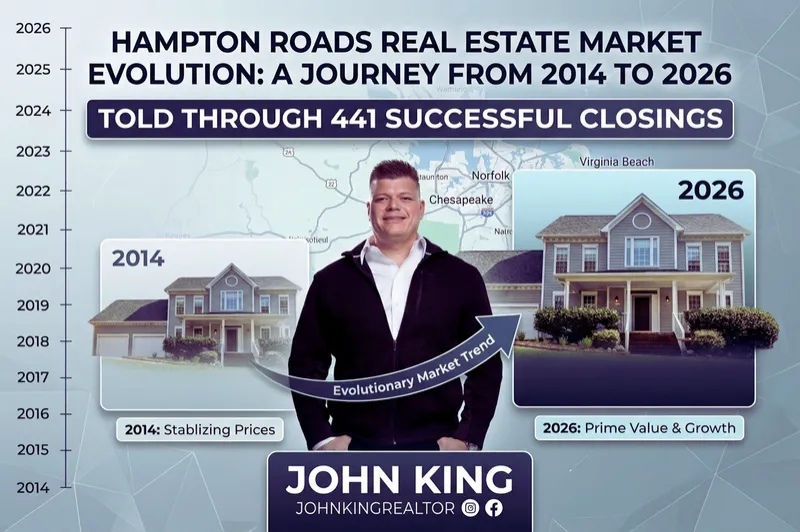
Written by John King, a U.S. Navy veteran and Berkshire Hathaway HomeServices RW Towne Realty REALTOR® with 441 closings across Hampton Roads, this library covers what buyers, sellers, and military families actually need to know about real estate in Virginia Beach, Norfolk, Chesapeake, and the surrounding 757.
Explore more than 200 original Hampton Roads real estate articles covering local neighborhoods, military PCS moves, VA loan strategy, home selling, waterfront property, market trends, and home buying — lessons drawn from more than 13 years of local transactions, not syndicated content.
Every guide is organized by topic below. Start with the cornerstone resources, browse a cluster, or scroll to the newest articles.
Start here
Start with these six cornerstone resources, then explore the supporting guides below.



Latest Hampton Roads Real Estate Articles
New guides and market updates are added every week. Newest first.
VA Loan and Divorce in Virginia Beach: What to Know
For military couples in Virginia Beach and across Hampton Roads, a divorce that involves a VA loan carries a layer of complexity that most civilian divorces never touch. The VA loan is one of the most valuable benefits a service member earns, and how it is handled in a divorce affects not just the home, but the veteran's ability to use that benefit again in the future. Getting it wrong can leave a veteran liable for a mortgage on a house they no longer live in, with their entitlement locked up for years. This guide walks through how a VA loan works in a divorce, the options for handling it, and the one misconception that causes the most damage.
As with everything in a divorce, an important note first: this is general information, not legal or lending advice. The specifics of your loan belong with a VA approved lender, and the division of your property belongs with your divorce attorney. As a Navy veteran who has guided many Hampton Roads military families through home sales, John King handles the real estate piece, an accurate value and a clean, neutral sale or process, and points you to the right professionals for the rest. For a confidential conversation, call 757-270-3994.
The One Thing Most People Get Wrong: The Decree Does Not Remove You From the Loan
Start with the misconception that causes the most harm, because understanding it changes how you approach everything else.
Many people believe that if the divorce decree awards the house to one spouse, the other spouse is off the mortgage. This is incorrect, and it is one of the most damaging assumptions in a military divorce. A divorce decree divides assets between the two spouses, but it does not change anyone's obligation to the lender. Your lender is not a party to your divorce and is not bound by the decree. If both names are on the VA loan, both people remain fully liable for it until the loan is refinanced to remove one person, assumed by one party, or paid off entirely.
The practical danger is real. If your name stays on the mortgage and your ex-spouse is supposed to make the payments but does not, the missed payments land on your credit too, and they can affect your future loan eligibility, even though you moved out and the decree says the home is theirs. Before you consider a VA loan settled in a divorce, the loan itself has to actually be dealt with, not just addressed on paper in the decree.
How VA Entitlement Works in a Divorce
To understand your options, you need to understand entitlement. VA loan entitlement is the benefit, tied to the veteran, that allows a VA loan to be guaranteed. When you buy a home with a VA loan, your entitlement generally stays tied to that home until the loan is paid in full, refinanced, or properly assumed.
That matters in a divorce because as long as the entitlement is tied up in the marital home, the veteran's ability to use the VA benefit again for a future purchase is limited. So for the veteran, a central goal is usually restoring that entitlement so it can be used again. There are a few ways that happens, and which one fits depends on who keeps the home and whether either spouse is a veteran.
The Options for a VA Loan in a Divorce
There are generally four ways to handle a VA loan in a divorce, each with different consequences for liability and entitlement.
Sell the home and pay off the loan. This is often the simplest and cleanest option. Selling provides an immediate financial separation, pays off the VA loan from the proceeds, and generally sets up restoration of the veteran's entitlement so the benefit can be used again. For many divorcing couples, especially when neither party can comfortably afford the home alone, selling is the path that creates the cleanest break. Keep the closing statement and payoff confirmation, as these are often needed when the veteran's Certificate of Eligibility is updated.
The veteran keeps the home and refinances. If the veteran wants to keep the home, refinancing into their own name removes the ex-spouse from the loan and, importantly, still satisfies occupancy since the veteran continues to live there. The veteran has to qualify on their own income, which is a real consideration on a single income post divorce.
The ex-spouse keeps the home. A civilian ex-spouse cannot obtain a new VA loan, because the benefit belongs to the veteran, but they can keep the home in one of two ways. They can assume the existing VA loan if they qualify with the lender, or they can refinance into a conventional loan. There is an important catch with assumption, covered below, that determines whether the veteran's entitlement is freed.
Release of liability. In some cases, a spouse can be released from liability on the loan without a full refinance. This removes their obligation to repay, but, and this is a critical distinction, being released from liability is not the same as restoring entitlement. The two are separate outcomes, and they are frequently confused.
The Distinction That Trips People Up: Liability Versus Entitlement
This is worth its own section because it is subtle and consequential. Removing your liability for the loan and restoring your VA entitlement are two different things, and one does not automatically achieve the other.
When a civilian ex-spouse assumes a VA loan, there are two versions. In an assumption without release of liability, the ex-spouse takes over the payments, but the veteran can remain on the hook if the ex defaults, and crucially, the veteran's entitlement remains tied to the property. In an assumption with substitution of entitlement, which is only possible if the ex-spouse is also an eligible veteran with their own entitlement, the second veteran's entitlement replaces the first veteran's. That fully releases the original veteran from liability and restores their full VA benefit.
So if you are the veteran and your goal is to use your VA benefit again, you need to confirm not just that you are off the hook for payments, but specifically that your entitlement has been restored. Ask your lender that exact question, because the answer is not always the same.
A Few More Things Military Couples Should Know
The occupancy rule still applies. VA loans are for primary residences, generally requiring the home to be occupied for at least 12 months after closing. A veteran cannot refinance the home solely into their own name and then immediately move out and rent it to the ex-spouse, because that would violate VA occupancy requirements. There are nuances around deployments and temporary separations, so confirm your specific situation with your lender.
Qualifying on one income, with military pay counted fully. After a divorce, the spouse keeping the home has to qualify on their own. For service members, it helps to know that military income is more than base pay. Allowances like BAH and BAS are tax-free, and a lender can gross them up, which raises the effective income you qualify on. This can make a meaningful difference in whether a refinance or assumption pencils out.
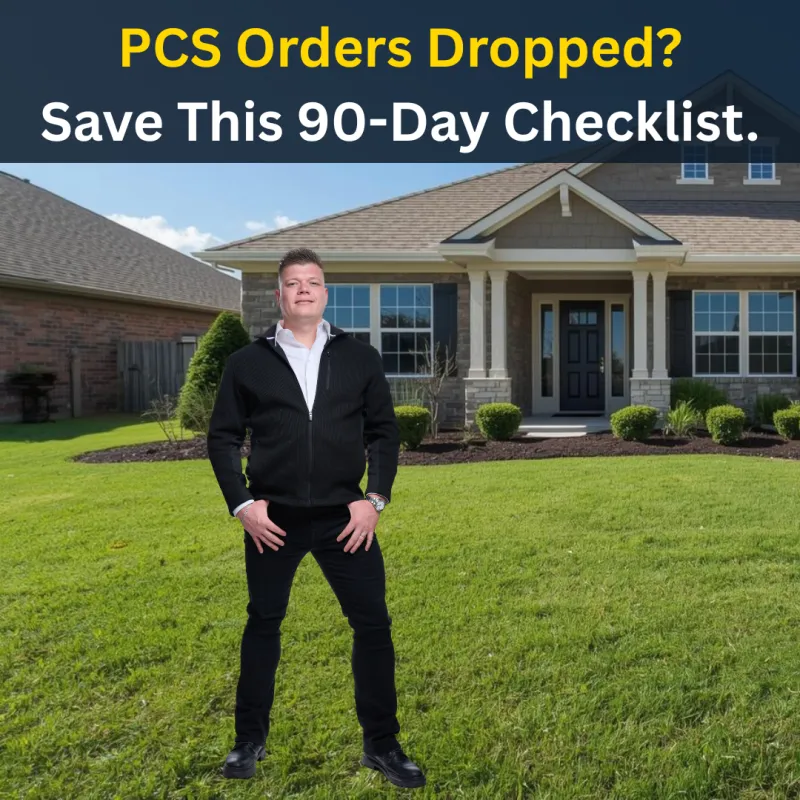
PCS timing can force the issue. Military orders do not wait for a divorce to finalize. A pending Permanent Change of Station can compress the timeline and force decisions about the loan, the listing, and closing dates. For relocation logistics alongside a divorce, the Virginia Beach military PCS guidance is a useful companion.
Both-veteran couples have extra math. When both spouses are veterans who used joint entitlement on the loan, the divorce affects both of their entitlements, and neither is fully restored until the loan is paid off or properly refinanced. Dividing the respective entitlements becomes part of the settlement conversation.
Where the Real Estate Piece Fits
The value of the home drives every one of these decisions. Whether the answer is to sell, to refinance, or to have one spouse assume the loan, you need an accurate, neutral value to make the numbers work, for the buyout math, for the settlement, and for deciding whether keeping the home is even realistic on one income.
That neutral value is the real estate role in a VA loan divorce, and it connects to the broader picture of selling a house during a divorce in Virginia Beach, where the same neutral, documented approach applies. A free home valuation is the right first step, useful for settlement talks, for a refinance conversation with your lender, or simply for understanding your options. And if selling turns out to be the cleanest path, an experienced approach to selling a Virginia Beach home keeps the process clean and neutral for both parties.
VA Loan and Divorce FAQ
Does the divorce decree remove me from the VA loan?
No. A divorce decree divides assets between spouses, but it does not change your obligation to the lender. If both names are on the VA loan, both people remain liable until the loan is refinanced, assumed, or paid off, regardless of what the decree says. If your ex is supposed to pay but does not, missed payments can still affect your credit. This is the most common and most damaging misconception in a military divorce.
What happens to my VA entitlement in a divorce?
VA entitlement is tied to the veteran and stays tied to the home until the loan is paid in full, refinanced, or properly assumed with substitution of entitlement. As long as it is tied up, your ability to use the VA benefit again for a future purchase is limited. Selling and paying off the loan, or refinancing, generally sets up restoration of your entitlement. Confirm the specifics with a VA approved lender.
Can my ex-spouse keep the house if it has a VA loan?
Yes, in one of two ways. A civilian ex-spouse cannot get a new VA loan, but they can assume the existing VA loan if they qualify with the lender, or refinance into a conventional loan. If they assume it and they are not a veteran, your entitlement generally stays tied to the property unless the loan is otherwise refinanced or paid off.
Is being released from liability the same as restoring my entitlement?
No, and this is a critical distinction. Being released from liability removes your obligation to repay the loan, but it does not automatically restore your VA entitlement. Your entitlement can remain tied to the property even after you are released from liability. If your goal is to use your VA benefit again, confirm with your lender specifically that your entitlement has been restored, not just that your liability has been removed.
Can I refinance the VA loan into my name and then move out?
Generally no. VA loans require the home to be a primary residence, typically for at least 12 months after closing. A veteran cannot refinance the home solely into their own name and then immediately move out and rent it to the ex-spouse, as that would violate VA occupancy requirements. There are nuances for deployments and temporary situations, so confirm yours with a VA approved lender.
What if both of us are veterans?
When both spouses are veterans who used joint entitlement, the divorce affects both entitlements, and neither is fully restored until the loan is paid off or properly refinanced. If the spouse keeping the home is a veteran, they may be able to assume the loan with substitution of their own entitlement, which releases the other veteran and restores their benefit. This math often becomes part of the settlement negotiation.
Should we just sell the house?
For many divorcing military couples, selling is the simplest and cleanest option. It provides immediate financial separation, pays off the VA loan from the proceeds, and generally sets up restoration of the veteran's entitlement. It also avoids the delays and negotiations that can come with assumptions or refinancing. Whether it is right for you depends on your equity, what each of you can afford alone, and your settlement, decisions for you, your attorney, and your lender.
How does a VA loan divorce work with a PCS?
Military orders do not wait for a divorce to finalize, and a pending PCS can compress the timeline and force quick decisions about the loan, the listing, and closing dates. Planning around the report date matters. An agent who understands military life in Hampton Roads can help keep the property piece organized around your orders.
If you are facing this situation, this guidance is built on the 13 year Hampton Roads transaction study.
About the Author
John King is a Navy veteran and licensed real estate agent with Berkshire Hathaway RW Towne Realty, serving Hampton Roads including Virginia Beach, Norfolk, and Chesapeake. He brings a calm, neutral, and discreet approach to divorce home sales, accurate values both sides can trust and a clean process, without ever crossing into legal or lending advice.
📞 757-270-3994 📧 [email protected] 🌐 www.757King.com
Curious what your home is worth in today's market? Get a free home valuation and find out where you stand.
This article is general information, not legal, tax, or lending advice. Confirm VA loan specifics with a VA approved lender and consult a qualified Virginia family law attorney about your situation.
Related guides from John King
Written by John King, Navy veteran & REALTOR®, Berkshire Hathaway HomeServices RW Towne Realty · (757) 270-3994 · About John

Why these guides are different
Every article here is written by one local agent from his own transaction record, not by a content farm. The numbers below are the basis for the advice.

John King is a former Navy Machinist Mate and a licensed Virginia REALTOR® with Berkshire Hathaway HomeServices RW Towne Realty in Virginia Beach. Licensed since 2013, he has logged 441 closings across Virginia Beach, Norfolk, Chesapeake, Suffolk, Hampton, and Newport News, and specializes in military PCS relocation, VA loans, and waterfront property. He holds a 5.0 Google rating across 117 reviews and has earned the HRRA Circle of Excellence every year since 2015.
About John King See the transaction studyCommon questions about this library
Tap a question to expand it.
What is the Hampton Roads Real Estate Blog?
Which Hampton Roads neighborhoods are closest to each base?
How do VA loans work when buying in Virginia Beach or Norfolk?
What is the Hampton Roads real estate market like right now?
Should I buy or rent during a PCS to Hampton Roads?
Ready to talk about your move?
Reading is a good start. A 15-minute conversation with a local agent who has logged 441 closings in Hampton Roads is a better one.
Prefer to talk? Call or text John at (757) 270-3994.

441 Closings
Client-side closings across Hampton Roads since 2014.

189 VA-Financed Sales
Direct experience with military and veteran buyers.

270 Subdivisions
Experience spread across the whole region.

FOLLOW US


COMPANY
CUSTOMER CARE
LEGAL
Copyright 2026 John King | KingRealtor757. All Rights Reserved. Equal Housing Opportunity. REALTOR(R). Virginia License 0225211050.