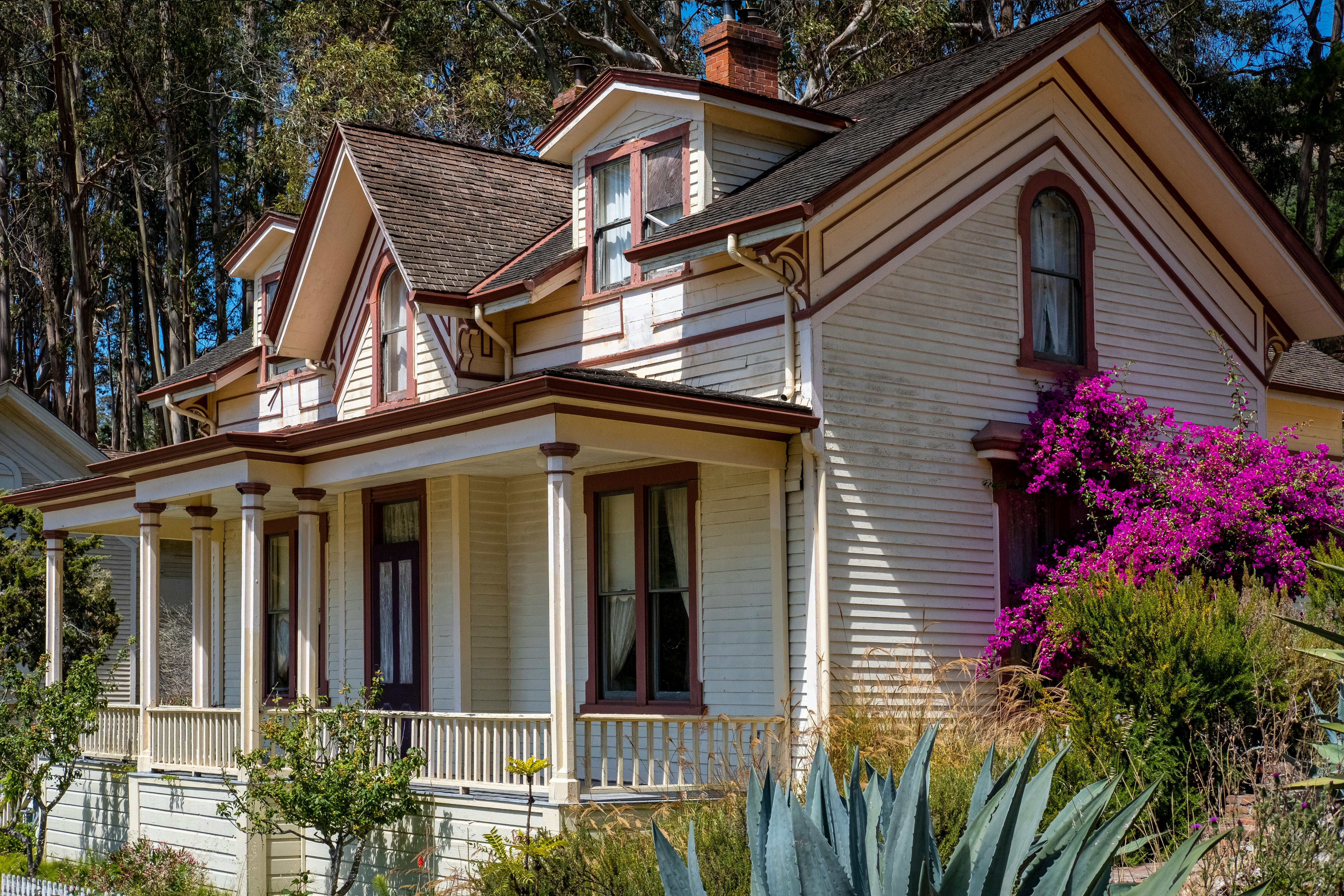
Lynnhaven House Virginia Beach: History of the Circa 1725 Landmark and Lynnhaven Area
The Lynnhaven House is one of the oldest standing dwellings in all of Virginia, and one of the best preserved early colonial homes in the entire country. Built around 1725 near the Lynnhaven River in what is now northern Virginia Beach, this brick farmhouse offers a remarkably intact window into the life of a middle class colonial planter, not a wealthy aristocrat, which is part of what makes it so historically valuable. For anyone interested in the deep history of Virginia Beach, or in owning a home in one of its most historic corners, the Lynnhaven House and the area around it tell a story that reaches back three centuries. This guide covers the history of the Lynnhaven House, the area that surrounds it, and what buyers should know about this part of Virginia Beach.
Where the Lynnhaven House and the Lynnhaven Area Sit
The Lynnhaven House stands at 4405 Wishart Road in the northern part of Virginia Beach, in zip code 23455. It sits on a quiet, tree screened parcel near the Lynnhaven River, in the broader Lynnhaven area that gives the river, and so much of this part of the city, its name.
The surrounding area is rich with history. Within roughly a mile and a half of the Lynnhaven House sit the Adam Thoroughgood House, the historic Old Donation Church, and a cluster of historical markers commemorating the colonial Lynnhaven Parish and the witchcraft trial of Grace Sherwood in 1706. This pocket of northern Virginia Beach, near Independence Boulevard, Witchduck, and the Lynnhaven River, is arguably the single most historically significant square mile in the city.
The area today is fully developed and suburban, with established neighborhoods, shopping along Independence Boulevard, and convenient access to Town Center, the interstates, the Shore Drive corridor, and the Chesapeake Bay beaches. The Lynnhaven House itself, though now on about five acres rather than its original plantation acreage, still preserves a sense of seclusion behind its screen of trees.
The History of the Lynnhaven House
The Lynnhaven House was built around 1725, a date confirmed through dendrochronology, the science of dating wood by its tree rings. That dating places it among the oldest standing dwellings in Virginia.
The house was built by Francis Thelaball the Second, a planter and ship's carpenter. This detail matters. Thelaball was not a wealthy aristocrat but what historians call a middling planter, a middle class landowner. As a result, the Lynnhaven House offers something rarer than another grand mansion. It provides a genuine glimpse into the life of a middle class colonial family rather than the colonial elite. Francis, his wife Abigail, their five sons, an apprentice, and several enslaved people lived and worked on the property, which originally extended across roughly 250 acres of plantation land.
Architecturally, the Lynnhaven House is a treasure. It is a one and a half story brick dwelling, laid in English bond, with a hall and parlor plan, a side gabled roof, and massive T shaped exterior end chimneys. Inside, it retains remarkable original features, including a closed string Jacobean type staircase and molded ceiling joists, holdovers of seventeenth century English vernacular building traditions. The house is estimated to retain roughly 85 percent of its original materials, which makes it one of the best preserved buildings of its era anywhere in the country.
The Name Mystery, Corrected
For much of its modern history, the house was known as the Wishart Boush House, a name connected to later families associated with the property. But that name turned out to be historically inaccurate.
The name Lynnhaven House was first given to the home in the 1970s by the Association for the Preservation of Virginia Antiquities, after the nearby Lynnhaven River. For decades, the older Wishart Boush name persisted alongside it. Then, following extensive new research, an updated National Register of Historic Places nomination formally corrected the record. The Virginia Landmarks Register approved the update in December 2024, and the National Register approved it in April 2025, officially establishing Lynnhaven House as the historically accurate name and retiring the erroneous older one. The update also refined the property boundaries to the five intact acres around the historic house and its cemetery, and expanded the research arguing for the property's statewide significance.
For a house this old, having its very name corrected by formal historical review in 2024 and 2025 is a reminder that the study of these landmarks is still active and evolving.
The Boush Family Cemetery
Behind the Lynnhaven House, to the south, lies a small historic cemetery. It is the burial ground of members of the Boush family, who owned the property in the late eighteenth and early nineteenth centuries, and it is the reason the house was once known in part as the Boush House. The cemetery contains several marked box tomb graves, with archaeology suggesting additional unmarked graves may be present. The burial ground was in poor condition when preservationists acquired the property, and it underwent restoration in 1975. Today it remains a quiet, historic feature of the grounds.
How the Lynnhaven House Was Saved
Like many colonial structures, the Lynnhaven House survived into the modern era thanks to preservation minded owners and organizations.
The house served as a private residence for centuries. It is credited in part to William W. Oliver the Third, who is recognized for carefully adding minimal modern conveniences to the eighteenth century structure while preserving its historic character. In 1971, the heirs of William W. Oliver the Third donated the house to the Association for the Preservation of Virginia Antiquities, now known as Preservation Virginia, to honor their parents' legacy. The house was first listed on the National Register of Historic Places in 1969. The City of Virginia Beach began operating the site in 2006 and took ownership in 2008, with the Virginia Department of Historic Resources holding a preservation easement. Today the Lynnhaven House is operated as a museum by the Virginia Beach History Museums, alongside the surrounding grounds, gardens, and the Lynnhaven Colonial Education Center.
The Historic Lynnhaven Area Today
The Lynnhaven House anchors one of the most historic areas in Virginia Beach, and the neighborhoods around it reflect a mix of established homes, mature trees, and convenient northern Virginia Beach living.
A deeply historic setting. The area around the Lynnhaven House includes the Adam Thoroughgood House, Old Donation Church, the original Lynnhaven Parish sites, and the markers commemorating the Grace Sherwood trial of 1706. For history minded buyers, few areas of the city offer this density of colonial heritage.
Established neighborhoods. The broader Lynnhaven area of northern Virginia Beach includes established single family neighborhoods, many built from the mid twentieth century onward, with mature trees, generous lots, and in many cases water access or water views along the Lynnhaven River system.
Water access. The Lynnhaven River and its branches wind throughout this part of Virginia Beach, giving many area neighborhoods access to the water, with the river connecting to the Chesapeake Bay at Lynnhaven Inlet.
Convenient location. The Lynnhaven area sits near Independence Boulevard, Town Center, the interstates, the Shore Drive corridor, and the Chesapeake Bay beaches, combining historic character with everyday convenience.
Visiting the Lynnhaven House
The Lynnhaven House is operated as a historic site by the Virginia Beach History Museums. The museum offers tours, programs, and special events, and the grounds include gardens and the historic Boush family cemetery. The site has at times been closed for restoration, with the Lynnhaven Colonial Education Center hosting select programs, so visitors should confirm current hours and tour availability with the Virginia Beach History Museums before planning a visit. For residents of the surrounding area, the Lynnhaven House is a remarkable historic amenity right in the neighborhood.
Why the Lynnhaven House Matters
The Lynnhaven House matters for several reasons. It is one of the oldest standing dwellings in Virginia, dated to around 1725. It is exceptionally well preserved, retaining an estimated 85 percent of its original materials. And it tells the story of a middle class colonial family rather than the wealthy elite, offering a more representative picture of everyday colonial life in Tidewater Virginia. Together with the nearby Adam Thoroughgood House and the Adam Keeling House in the Great Neck area, the Lynnhaven House forms part of a remarkable group of surviving early colonial homes in Virginia Beach, a city whose history reaches back to the earliest decades of English settlement in America.
Lynnhaven House FAQ
Where is the Lynnhaven House in Virginia Beach?
The Lynnhaven House is located at 4405 Wishart Road in northern Virginia Beach, zip code 23455, near the Lynnhaven River. It sits within about a mile and a half of the Adam Thoroughgood House and Old Donation Church, in one of the most historic areas of the city.
When was the Lynnhaven House built?
The Lynnhaven House was built around 1725, a date confirmed by dendrochronology, the science of dating wood by its tree rings. This makes it one of the oldest standing dwellings in Virginia.
Who built the Lynnhaven House?
The Lynnhaven House was built by Francis Thelaball the Second, a planter and ship's carpenter. He was a middle class, or middling, planter rather than a wealthy aristocrat, and the house reflects the life of a middle class colonial family.
Why was it called the Wishart Boush House?
The house was long known as the Wishart Boush House after later families associated with the property, including the Boush family, whose cemetery sits on the grounds. Research later determined this name was historically inaccurate, and an updated National Register nomination formally corrected the official name to Lynnhaven House, with approvals in December 2024 and April 2025.
Is the Lynnhaven House open to the public?
The Lynnhaven House is operated as a museum by the Virginia Beach History Museums and offers tours, programs, and events. It has at times been closed for restoration, so confirm current hours and availability with the Virginia Beach History Museums before visiting.
How old is the Lynnhaven House and how well preserved is it?
The Lynnhaven House is nearly 300 years old, built around 1725. It is considered one of the best preserved buildings of its era in the country, retaining an estimated 85 percent of its original materials.
What other historic homes are near the Lynnhaven House?
The Adam Thoroughgood House sits about a mile and a half away, and the Adam Keeling House is located in the Great Neck area of Virginia Beach. Together these homes represent some of the oldest surviving colonial dwellings in the city. The nearby Old Donation Church and Grace Sherwood historical markers add to the area's colonial heritage.
Is the Lynnhaven area a good place to buy a home?
The Lynnhaven area of northern Virginia Beach offers established neighborhoods, mature trees, water access along the Lynnhaven River for many homes, and a convenient location near Independence Boulevard, Town Center, and the Chesapeake Bay beaches, all within one of the most historic parts of the city. Always verify the specific neighborhood, school assignments, and property details for any home you are considering.
About the Author
John King is a Navy veteran and licensed real estate agent with Berkshire Hathaway RW Towne Realty, serving Hampton Roads including Virginia Beach, Norfolk, and Chesapeake. Known for his straightforward approach and market expertise.
📞 757-270-3994 📧 [email protected] 🌐 www.757King.com
Curious what your home is worth in today's market? Get a free home valuation and find out where you stand.
📚 SOURCES AND REFERENCES
Virginia Department of Historic Resources, Lynnhaven House, including the 2024 to 2025 updated National Register nomination
National Register of Historic Places records
Virginia Beach History Museums, Lynnhaven House
Historical marker records, Wishart Road
Wikipedia: Lynnhaven House
Related guides from John King
Written by John King, Navy veteran & REALTOR®, Berkshire Hathaway HomeServices RW Towne Realty · (757) 270-3994 · About John
