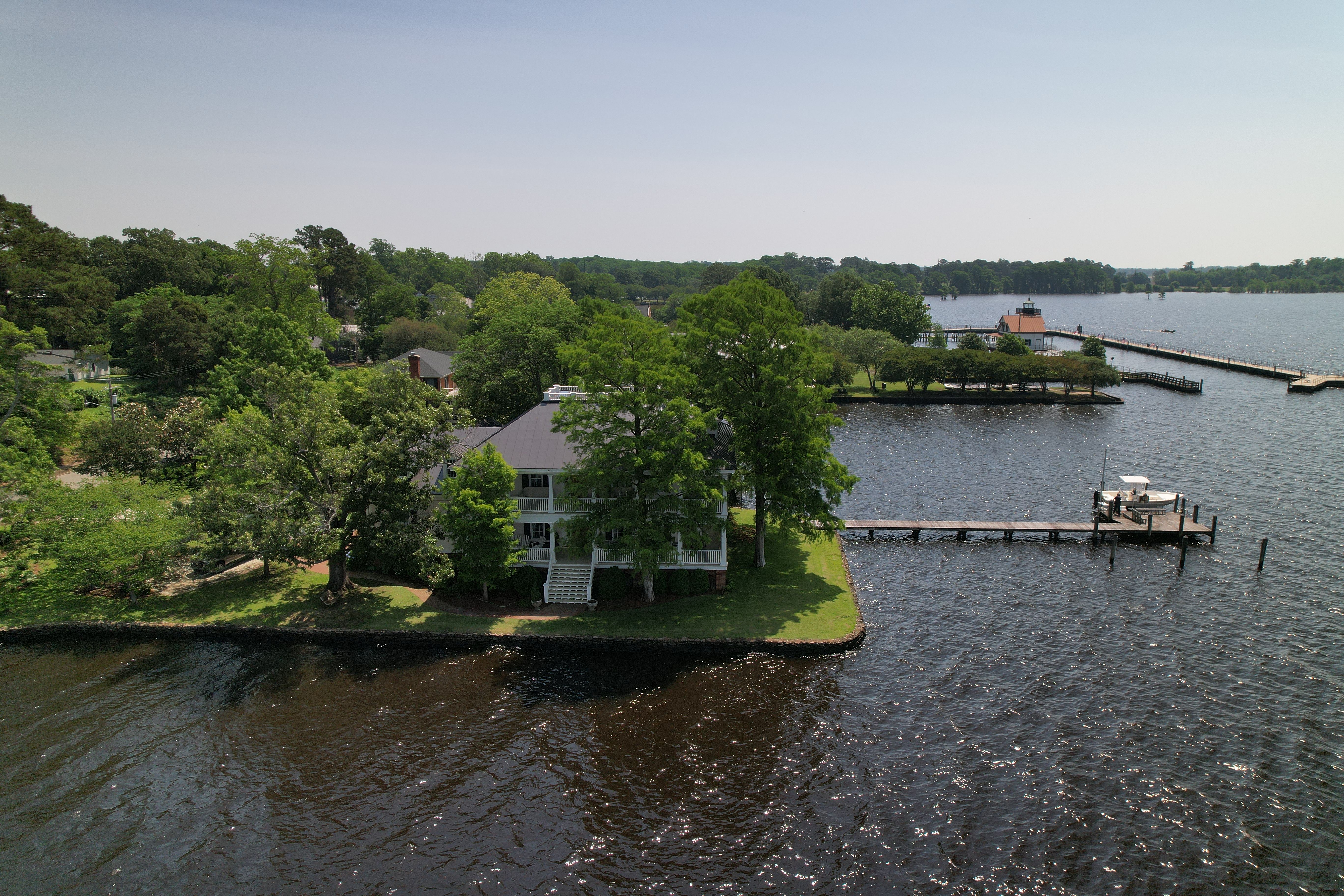
Virginia Beach Waterfront Luxury Home Buyer Guide
Buying a waterfront home in Virginia Beach is different from buying any other kind of property. The water that makes these homes so desirable also brings a set of considerations that interior homes never face: docks and the permits behind them, boat lifts and bulkheads, deep water access and tides, flood zones and insurance, and the specific character of each waterway and the neighborhoods along it. Understanding those details is the difference between buying a waterfront home and buying the right waterfront home.
This guide brings together what buyers and sellers of luxury waterfront homes in Virginia Beach need to know, drawn from the regulations that govern waterfront construction, the realities of flood insurance, and years of working the waterfront neighborhoods across the city. Whether you are looking at a deep water estate on Linkhorn Bay, a custom home on the Lynnhaven River, or a bayfront property along Shore Drive, the fundamentals are the same, and getting them right protects both your lifestyle and your investment.
Understanding Virginia Beach's Waterfront
Virginia Beach is one of the great waterfront cities on the East Coast, and its water comes in many forms. Understanding which waterway a home sits on is the first step, because each offers a different lifestyle, different boating access, and different considerations.
The Lynnhaven River system, with its Eastern and Western Branches and the many creeks and coves that feed it, threads through much of the city and connects to the Chesapeake Bay at Lynnhaven Inlet. Neighborhoods like Thoroughgood, Church Point, Chesopeian Colony, Middle Plantation, and Thalia sit along these waters, blending history with waterfront living. Broad Bay and Linkhorn Bay, in the Great Neck and North End areas, offer some of the deepest water and most prestigious addresses in the city, home to neighborhoods like Bay Island, Linkhorn Oaks, Birdneck Point, and Bay Colony. The Chesapeake Bay itself defines the Shore Drive corridor, where bayfront communities like Cape Story by the Sea sit beside First Landing State Park. And the Atlantic Ocean shapes the North End, where neighborhoods like Princess Anne Hills offer the rare combination of deep water access and ocean beach proximity.
Each of these waters has its own character. Some offer navigable deep water suitable for large vessels with direct access to the Chesapeake Bay and the Atlantic. Others are tidal, where the depth changes with the tide and boat lifts become essential. Knowing the difference is fundamental to buying the right waterfront home.
Docks and Piers: What Every Waterfront Buyer Should Know
For most waterfront buyers, the dock is one of the most valuable features of the property. It is also one of the most regulated, and understanding how docks and piers work in Virginia Beach is essential.
Docks require permits, and the water bottom is public trust land
In Virginia, the land beneath the water, known as subaqueous land or the water bottom, is managed by the Virginia Marine Resources Commission as a public trust on behalf of all citizens of the Commonwealth. This means that even when you own waterfront property, building a dock, pier, bulkhead, or boat lift, or dredging a channel, requires permission to use that water bottom.
The permitting process runs through a Joint Permit Application, or JPA, submitted to the Virginia Marine Resources Commission. The Commission acts as a clearinghouse and distributes the application to the other agencies that review waterfront construction, including the United States Army Corps of Engineers, the Virginia Institute of Marine Science, and the Virginia Department of Environmental Quality. Within the City of Virginia Beach, a waterfront project also requires approval from the Wetlands Board, approval from the Waterfront Operations Section of the Planning Department, and a building permit from the Department of Permits and Inspections. The city charges a nonrefundable processing fee for waterfront construction and dredging applications.
Size guidelines for docks and piers
The Code of Virginia provides general guidelines for residential docks and piers. As a rule of thumb, piers that do not exceed six feet in width, finger piers that do not exceed five feet in width, and L or T head platforms and floating docking platforms that do not exceed four hundred square feet in the aggregate generally fall within the standard allowances, provided they do not extend beyond established navigation or pier lines. Projects that exceed these guidelines, or that affect wetlands or navigation, typically require additional review.
Boat lifts and boathouses
Boat lifts and open sided roofs designed to shelter a single boat slip or lift are generally permitted, subject to local ordinance. In tidal waters, which describe much of the Lynnhaven system and many Virginia Beach creeks and coves, a boat lift is often essential rather than optional, because it keeps a vessel out of the water and protects it as tides rise and fall.
Always verify existing structures
When buying a waterfront home with an existing dock, pier, bulkhead, or lift, it is essential to verify that these structures were properly permitted and are in good condition. Walk the dock and bulkhead at low tide, inspect the pilings, the decking, and the lift mechanism, and confirm the structures sit within the property's riparian lines. A licensed marine contractor can assess condition, and confirming the permit history protects you from inheriting an unpermitted structure.
Bulkheads, Living Shorelines, and Shoreline Protection
Beyond the dock, the way a waterfront property meets the water matters enormously for its long term value and maintenance.
Many Virginia Beach waterfront homes are protected by bulkheads, the vertical walls that hold back the land and resist erosion. A bulkhead is a significant piece of infrastructure, and its condition is one of the most important things to evaluate in a waterfront purchase. A failing bulkhead can be expensive to replace and, like a dock, replacing or repairing it requires a Joint Permit Application.
Virginia has increasingly encouraged living shorelines, which use natural materials like plantings, sand fill, and stone to stabilize the shore while preserving habitat. It is the stated policy of the Commonwealth that living shorelines are the preferred alternative for stabilizing tidal shorelines where conditions allow. For buyers, understanding whether a property has a bulkhead, a living shoreline, or natural marsh frontage helps clarify both the maintenance picture and the character of the waterfront.
Flood Zones and Flood Insurance: The Most Important Due Diligence
No part of waterfront due diligence matters more than understanding flood risk and flood insurance, and the rules have changed in ways many buyers do not realize.
Standard homeowners insurance does not cover flood
This is the single most important thing to understand. A standard homeowners policy does not cover flood damage. Flood coverage requires a separate policy, either through the National Flood Insurance Program or a private flood insurer. In Virginia Beach, wind and flood are also typically separate coverages, so a complete waterfront insurance picture may involve multiple policies. If a waterfront home has a federally backed mortgage and sits in a high risk flood zone, flood insurance is generally required as a condition of the loan.
Flood zones, and why the zone is only part of the story
FEMA maps flood risk into zones. High risk Special Flood Hazard Areas include zones labeled A and AE, and the most stringent coastal designation, VE, which accounts for wave action and velocity. Lower risk areas fall into zones like X. You can check a property's flood designation through the FEMA Flood Map Service Center, the City of Virginia Beach's mapping and floodplain management tools, and Virginia's flood risk information system, and the city can provide written flood zone determinations.
But here is what many buyers miss: the flood zone alone no longer determines the insurance premium. Under FEMA's current pricing methodology, known as Risk Rating 2.0, premiums are calculated using a range of property specific factors, including the distance to water, the elevation of the home, the height of the first floor, the foundation type, the cost to rebuild, the type of flooding, and the deductible chosen. This is why two homes in the same neighborhood, even on the same street, can carry very different flood insurance quotes. It also means you should never estimate a waterfront home's flood insurance cost from the map alone. Always obtain an actual quote for the specific property during due diligence.
Elevation certificates and the Virginia Beach community discount
Under Risk Rating 2.0, an elevation certificate is no longer strictly required to purchase NFIP coverage, but it can still help. An elevation certificate is a survey based document that compares the building's lowest floor to the base flood elevation, and a home that sits higher above that elevation will generally see lower premiums. For many waterfront homes, obtaining or reviewing an elevation certificate remains worthwhile.
Virginia Beach buyers also benefit from a community wide discount. As of late 2025, the city maintained Class 7 status in FEMA's Community Rating System, which corresponds to a fifteen percent discount on NFIP premiums for eligible policies. This reflects the city's investment in floodplain management, though it does not replace the need for a property specific quote.
Lower risk does not mean no risk
It is worth remembering that a lower risk flood designation does not mean a property cannot flood. Nationally, a significant share of flood insurance claims come from outside the highest risk zones. For any waterfront or water adjacent home, flood risk deserves careful evaluation regardless of the mapped zone.
The Virginia Beach Boating Lifestyle
For many waterfront buyers, the appeal comes down to one thing: life on the water. Virginia Beach offers one of the richest boating environments on the East Coast, and the lifestyle varies by where you buy.
From the deep water neighborhoods of Linkhorn Bay and Broad Bay, boaters have navigable access toward the Chesapeake Bay and the Atlantic Ocean, suitable for larger vessels, sport fishing, and serious cruising. The Lynnhaven River system offers a network of creeks, coves, and branches to explore, with access to the bay through Lynnhaven Inlet. Along the Shore Drive corridor and the bayfront, residents enjoy calm Chesapeake Bay waters, paddle sports on creeks like Long Creek, and quick access to the Lynnhaven Inlet and its marinas. And in the North End, a rare few neighborhoods offer both deep water boating and a short walk to the ocean beach.
Beyond private docks, the region offers marinas, boat ramps including the Lynnhaven Municipal Boat Ramp, yacht clubs such as the Cavalier Golf and Yacht Club, and country clubs with marina facilities. The waters yield striped bass, bluefish, and the famous Lynnhaven oysters, and the protected creeks and bays are ideal for kayaking and paddle boarding. Whether your interest is a center console for fishing the bay, a sailboat for cruising, or a paddle board for exploring the creeks at sunrise, Virginia Beach has the water to match.
The Luxury Waterfront Neighborhoods of Virginia Beach
Virginia Beach's luxury waterfront market spans a remarkable range of neighborhoods, each with its own character, history, and waterway. Understanding them is the key to finding the right fit.
In the Great Neck and Broad Bay area, Bay Island offers a canal laced island of deep water boating, while Linkhorn Oaks delivers deep water luxury on Linkhorn Bay, and Great Neck Point carries the history of the Adam Keeling House on the Lynnhaven River. Broad Bay Point Greens surrounds a golf course on Broad Bay, and Baycliff offers custom homes on the water.
Along the Lynnhaven River and its branches, Thoroughgood anchors one of the city's most historic areas around the circa 1719 Adam Thoroughgood House, while Church Point combines luxury waterfront with land whose history reaches back to a 1639 parish church. Chesopeian Colony offers deep water access and a name honoring the Chesapeake Indians, Middle Plantation pairs custom homes with a name drawn from colonial Williamsburg, and Thalia blends history and waterfront in the heart of the city.
In the North End and Linkhorn Bay area, Bay Colony stands among the most prestigious addresses in the city, on land with history reaching back to a 1607 landing. Birdneck Point offers deep water living around the Cavalier Golf and Yacht Club, and Princess Anne Hills provides the rare combination of deep water access and a walk to the ocean beach.
Along the Chesapeake Bayfront and Shore Drive, Cape Story by the Sea offers bayfront living beside First Landing State Park, with the Cape Henry Trail running through the neighborhood.
Each of these neighborhoods rewards a buyer who understands not just the home, but the water it sits on, the dock and shoreline that come with it, and the flood and insurance picture that shapes long term ownership.
Working With a Waterfront Specialist
Waterfront luxury homes are a specialized market, and they reward specialized knowledge. As a Luxury Collection Specialist with Berkshire Hathaway HomeServices RW Towne Realty, and as a Navy veteran who knows these waters, John King brings the waterfront specific expertise that these purchases demand: understanding the difference between deep water and tidal access, evaluating docks, lifts, and bulkheads, navigating flood zones and insurance, and matching buyers to the right waterway and neighborhood across all of Virginia Beach.
Whether you are buying your first waterfront home or your finest, the fundamentals in this guide protect both your lifestyle and your investment. The water is the reason to buy. Understanding it is the reason to buy well.
Virginia Beach Waterfront FAQ
Do I need a permit to build a dock in Virginia Beach?
Yes. In Virginia, the water bottom is public trust land managed by the Virginia Marine Resources Commission, so building a dock, pier, bulkhead, or boat lift, or dredging, requires a Joint Permit Application submitted to the Commission. Within Virginia Beach, the project also requires Wetlands Board approval, Waterfront Operations approval, and a building permit. A licensed marine contractor typically handles the permitting.
How big can a residential dock be in Virginia Beach?
As a general guideline under the Code of Virginia, piers that do not exceed six feet in width, finger piers that do not exceed five feet in width, and platforms and floating docks not exceeding four hundred square feet in the aggregate generally fall within standard allowances, as long as they do not extend beyond established navigation or pier lines. Larger or more complex projects require additional review.
Does standard homeowners insurance cover flood damage on a waterfront home?
No. Standard homeowners insurance does not cover flood damage. Flood coverage requires a separate policy through the National Flood Insurance Program or a private flood insurer. In Virginia Beach, wind and flood are also typically separate coverages, so a waterfront home may need multiple policies for full protection.
Why do two similar waterfront homes have different flood insurance costs?
Under FEMA's current Risk Rating 2.0 methodology, flood insurance premiums are based on property specific factors including distance to water, elevation, first floor height, foundation type, rebuilding cost, flood type, and deductible, not just the flood zone. This is why two homes in the same area can have very different quotes, and why you should always get a property specific flood insurance quote during due diligence.
What flood zones are common for Virginia Beach waterfront homes?
Many Virginia Beach waterfront homes sit in high risk Special Flood Hazard Areas, including zones A and AE, and the coastal VE zone that accounts for wave action. Lower risk areas fall into zones like X. You can check a property's designation through the FEMA Flood Map Service Center, the City of Virginia Beach's mapping tools, and Virginia's flood risk information system.
Does Virginia Beach offer any flood insurance discount?
Yes. As of late 2025, Virginia Beach maintained Class 7 status in FEMA's Community Rating System, which corresponds to a fifteen percent discount on National Flood Insurance Program premiums for eligible policies. This community discount reflects the city's floodplain management efforts, but individual property factors still determine the final premium.
What is the difference between deep water and tidal waterfront?
Deep water access means a property has sufficient water depth for navigation at all or most tides, often suitable for larger vessels, and frequently with a direct route to the Chesapeake Bay or the Atlantic. Tidal waterfront has depth that changes with the tide, which can limit boating at low tide and makes a boat lift important. Knowing which a property offers is fundamental to matching it to your boating needs.
Which Virginia Beach neighborhoods are best for waterfront living?
Virginia Beach offers many luxury waterfront neighborhoods, each with its own character. Deep water boating is found in areas like Bay Island, Linkhorn Oaks, Birdneck Point, and Bay Colony. Historic Lynnhaven River waterfront defines Thoroughgood, Church Point, and Chesopeian Colony. Bayfront living anchors Cape Story by the Sea, and Princess Anne Hills offers the rare mix of deep water and ocean beach access. The right neighborhood depends on your priorities for water, lifestyle, and home.
Should I use a waterfront specialist to buy a waterfront home?
Waterfront purchases involve considerations that interior homes never face, including dock and bulkhead condition and permitting, deep water versus tidal access, riparian rights, and flood zones and insurance. A waterfront specialist who understands these factors and the specific neighborhoods and waterways of Virginia Beach helps you evaluate properties accurately and avoid costly surprises.
Planning your own purchase? See the A.N.C.H.O.R. Plan I run with every buyer, grounded in real deals I have documented start to finish.
About the Author
John King is a Navy veteran, a Luxury Collection Specialist, and a licensed real estate agent with Berkshire Hathaway RW Towne Realty, serving Hampton Roads including Virginia Beach, Norfolk, and Chesapeake. He specializes in waterfront and luxury homes and is known for his straightforward approach and market expertise.
📞 757-270-3994 📧 [email protected] 🌐 www.757King.com
Curious what your home is worth in today's market? Get a free home valuation and find out where you stand.
📚 SOURCES AND REFERENCES
Virginia Marine Resources Commission, Joint Permit Application and Habitat Management
City of Virginia Beach Planning Department, Wetlands Board and Waterfront Operations
Virginia Institute of Marine Science, Center for Coastal Resources Management
Code of Virginia, Title 28.2 (subaqueous lands and pier guidelines)
FEMA, National Flood Insurance Program and Risk Rating 2.0
City of Virginia Beach floodplain management and Community Rating System status
Related guides from John King
Written by John King, Navy veteran & REALTOR®, Berkshire Hathaway HomeServices RW Towne Realty · (757) 270-3994 · About John
