Lake Joyce Virginia Beach: History, Legend & Life on the Water
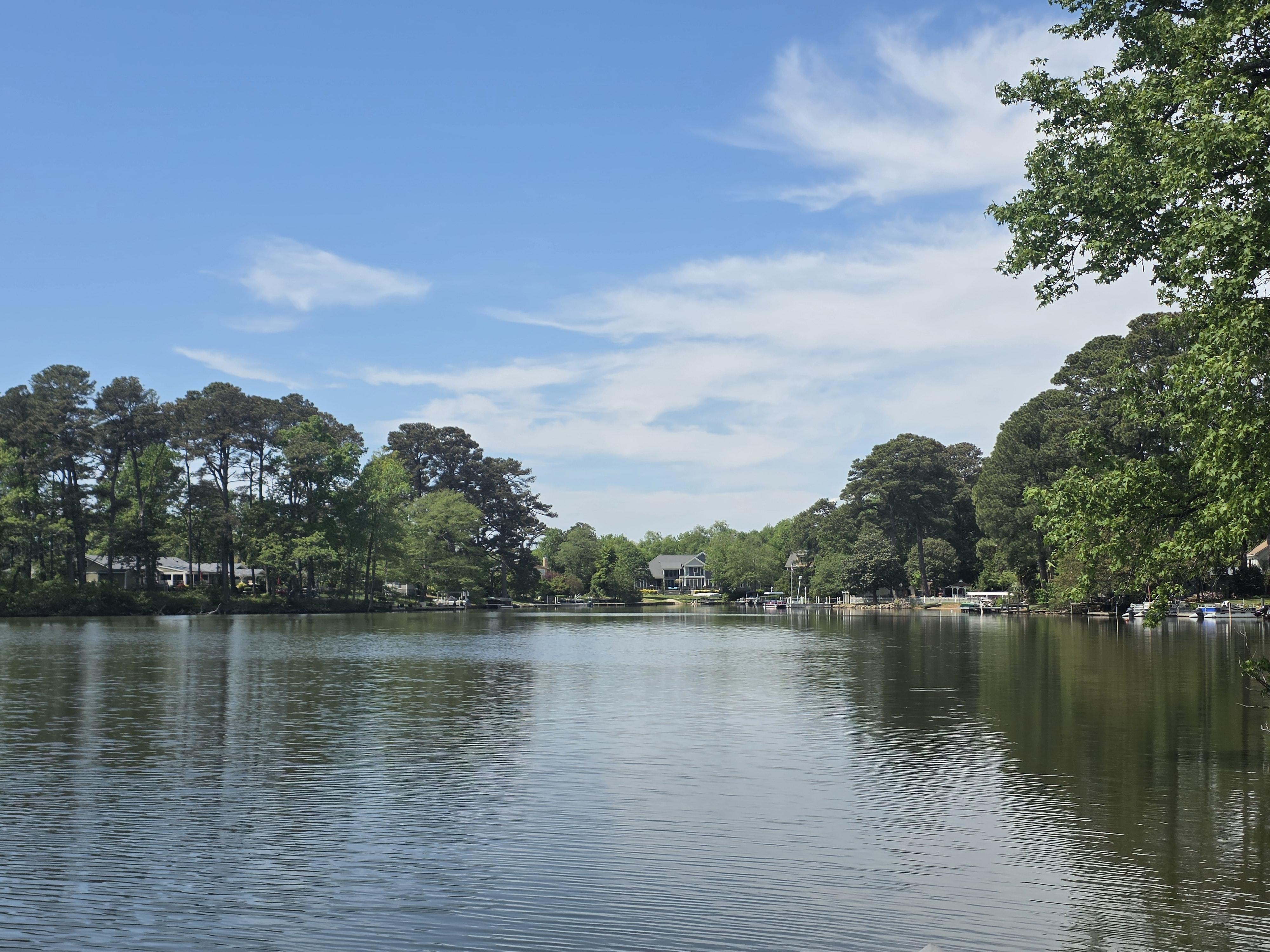
Most people who drive Shore Drive every day have no idea what is sitting just behind the tree line of Baylake Pines. Lake Joyce is one of the most historically significant and genuinely fascinating bodies of water in all of Virginia Beach. Its story runs from colonial settlers farming the land in the 1600s to a pirate legend involving Blackbeard himself, to one of the most unique recreational lakes in Hampton Roads today.
If you live in Chic's Beach or are considering buying here, understanding Lake Joyce is understanding a piece of this community that most people never get to know.
How Lake Joyce Got Its Name
The name Lake Joyce traces directly to the Joyce family, one of the earliest settler families in what is now the Baylake Pines area of Virginia Beach. Joyce family members are found in the historical record of this area as far back as 1624, when the region was first being settled by English colonists. During the period when the Joyce family farmed these lands, it is reported that over half of the surrounding acreage supported agricultural use.
The gravestones of Joyce family members can still be found along the lake. John Joyce, born in 1836, is recorded as a Farmer in the 1850 Census and a Laborer in the 1860 Census. He died of dysentery in 1869 at 33 years of age, after the Civil War had ended. His wife Celestine, born in 1849, is also buried at the Baylake site. Edward D. Joyce, born in 1874, has a gravestone with the inscription: "Beneath this stone in soft repose is laid a mother's dearest pride." He passed away in 1898 at 24 years of age.
The spelling of the family name appears as both Joyce and Joice in different census records, but the gravestones along the lake and records at Kempsville Baptist Church consistently use Joyce. That is the correct spelling and it is the one the lake carries today.
Research for the history of the name was compiled using the Sargeant Memorial Collection at the Slover Library in Norfolk, Ancestry.com, local cemetery plots, and with the assistance of local historian Robert Perrine of Old Donation Episcopal Church.
What Lake Joyce Used to Be
Before it became the freshwater lake residents know today, Lake Joyce was something entirely different. It was an inlet connecting Pleasure House Creek with the Chesapeake Bay. In the 1700s, the Lynnhaven River flowed into what is now Lake Joyce through Pleasure House Creek, providing a direct outlet to the bay and to the open water beyond.
That hydrological connection to the Chesapeake Bay is the reason for one of the most colorful chapters in the lake's long history.
Blackbeard, Treasure Island, and the Pirate Connection
According to local legend documented by the Baylake Pines Civic League and Attorney Jordan A. Pugh, approximately 300 years ago Edward Teach, better known as Blackbeard the Pirate, and his crew used the waters of what is now Lake Joyce as a base of operations.
The legend holds that Blackbeard and his men cut a channel approximately 500 feet long and 70 feet wide through a peninsula of land jutting into the lake. The dirt from that excavation was piled up into a giant earthwork extending the entire length of what became an island. That island, which still exists today, is known as Treasure Island, and also as Blackbeard's Island. The earthwork reportedly remains four to six feet deep despite nearly three centuries of time.
Blackbeard and his crew used the height of this elevated island position to spy on merchant ships passing through the Chesapeake Bay. Their vessel, the Queen Anne's Revenge, reportedly hid behind the island until the right moment to intercept unsuspecting merchant ships. Other notorious pirates of the era, including Major Stede Bonnet and Captain Worley, may also have used this location as a base of operations.
Edward Teach captured the sloop Betty off Cape Charles in 1717, plundering Portuguese Madeira wine and other cargo. From the Lake Joyce area, signals were reportedly relayed from a lookout at Cape Henry, now known as Blackbeard's Hill, south along the bay shoreline through a series of outposts until Blackbeard, resting at Pleasure House Tavern near what is now Lookout Road, was informed of an approaching target.
Blackbeard's reign came to an end in November 1718 at Ocracoke Inlet in North Carolina, where he was killed by Royal Navy Lieutenant Robert Maynard. Legend holds that whatever treasure may have been left behind at Pleasure House and Lake Joyce was never recovered.
The street names in Baylake Pines to this day reflect this pirate history: Bounty Road, John Silver Road, Sea Chest Road, Ben Gunn Road, Treasure Island Drive, Blackbeard Road, and Pleasure House Road. The neighborhood was named around this history intentionally when it was developed in the 1950s.
Treasure Island today is a 2.5 acre wooded island home to raccoons, rabbits, squirrels, fox, egrets, ducks, and ospreys. It functions as an undeveloped bird sanctuary and wildlife habitat. It was owned for decades by the Collier family, who developed Baylake Pines in the 1950s, before being sold to Hayden Dubay of Dubay Properties. The island remains undeveloped.
The Colonial History Around the Lake
The pirate chapter is the most dramatic, but the history of Lake Joyce runs deeper than Blackbeard. The area around the lake is believed by local historians to be the location of Henrytown, considered to be the third English settlement in Virginia. In 2007, US Army scientists reviewed site artifacts and concluded that Henrytown is on Lake Joyce in the neighborhood of Baylake Pines.
English settler Adam Thoroughgood, one of the most significant figures in early Virginia history, built his home on what was described as Indian Hill near a sandy bay and a freshwater lake in the 1630s. Bits of English china have been found on Battery Road, corroborating that well established settlers lived in this location. Thoroughgood passed in 1640. His wife Sarah maintained the property through two subsequent marriages until the home burned in 1650. Their son Adam II reportedly rebuilt in the same location, naming it The Grand Manor.
After the Revolutionary War, the Joyce family farmed the lands along the lake as the young country faced economic uncertainty. The railroad from Norfolk to the Virginia Beach oceanfront opened in 1883, gradually shifting the area from farmland to a destination for beach cottages.
Development and the Modern Neighborhood
Beach cottages began appearing along the western section of Lake Joyce in the early 1900s. Baylake Pines was developed to the east of the lake in the 1950s by the Collier family, who gave the neighborhood its pirate themed street names. More recently, Bayville at Lake Joyce was developed from lands that belonged to the former Baylake Pines private school.
The lake itself is owned by the City of Virginia Beach and is held as a reserve water supply. There is no public access to Lake Joyce. The neighborhoods with private access are Chic's Beach, Baylake Pines, Baylake Beach, and Bayville at Lake Joyce. Access is a privilege of residency in these specific communities, not a public amenity.
Lake Joyce Today: What Makes It Special
Lake Joyce is a private freshwater lake sourced by aquifers, meaning it is fed by underground water rather than tidal or storm water. That aquifer source is part of what keeps the lake clean and viable as a recreational water body.
It is the only lake in Virginia Beach that allows high speed power watercraft. That distinction matters enormously for residents and buyers. Jet skis, powerboats, wakeboarding, and water skiing are all permitted here. In a city where most freshwater lakes restrict motorized watercraft or allow only electric powered vessels, Lake Joyce offers a recreational experience that is genuinely unique within Virginia Beach.
The lake also accommodates kayaking, paddleboarding, and all manner of non-motorized water activity. Residents with lakefront access enjoy a lifestyle that combines the calm freshwater recreation of the lake with walking distance access to the Chesapeake Bay beach, making Lake Joyce properties among the most compelling water access opportunities in the entire Chic's Beach corridor.
What Lakefront Access Means for Real Estate
Properties with direct lake access in Baylake Pines, Baylake Beach, and Bayville at Lake Joyce command a premium that reflects both the recreational value and the exclusivity of the access. There is no mechanism to add more lakefront properties to Lake Joyce. The supply is permanently fixed by the geography and the existing neighborhood boundaries.
Buyers who want the powerboat lifestyle, the paddleboard lifestyle, or simply a home with lake views in a neighborhood where that access is private and protected have a very short list of options in Virginia Beach. Lake Joyce is at the top of that list.
If you are interested in properties with Lake Joyce access in Chic's Beach, Baylake Pines, or Bayville at Lake Joyce, call me directly. These properties move quickly and do not always reach the broader market before they are under contract.
Want to explore this area with a local agent? See my full home buying process, grounded in real deals I have documented start to finish.
About the Author
John King is a Navy veteran and licensed real estate agent with Berkshire Hathaway RW Towne Realty, serving Hampton Roads including Virginia Beach, Norfolk, and Chesapeake. Known for his straightforward approach and market expertise.
📞 757-270-3994 📧 [email protected] 🌐 www.757King.com
Curious what your home is worth in today's market? Get a free home valuation and find out where you stand.
Sources and References
Baylake Pines Civic League — Lake Joyce page: baylakepinescivicleague.com
History of Lake Joyce in Baylake Pines — Sargeant Memorial Collection at the Slover Library in Norfolk, Ancestry.com, local cemetery plots, and local historian Robert Perrine of Old Donation Episcopal Church
Lynnhaven River NOW — Blackbeard the Pirate: lynnhavenrivernow.org
The Cvillean — Virginia Beach's Most Notorious Tourist: thecvillean.org
Related guides from John King
Written by John King, Navy veteran & REALTOR®, Berkshire Hathaway HomeServices RW Towne Realty · (757) 270-3994 · About John
