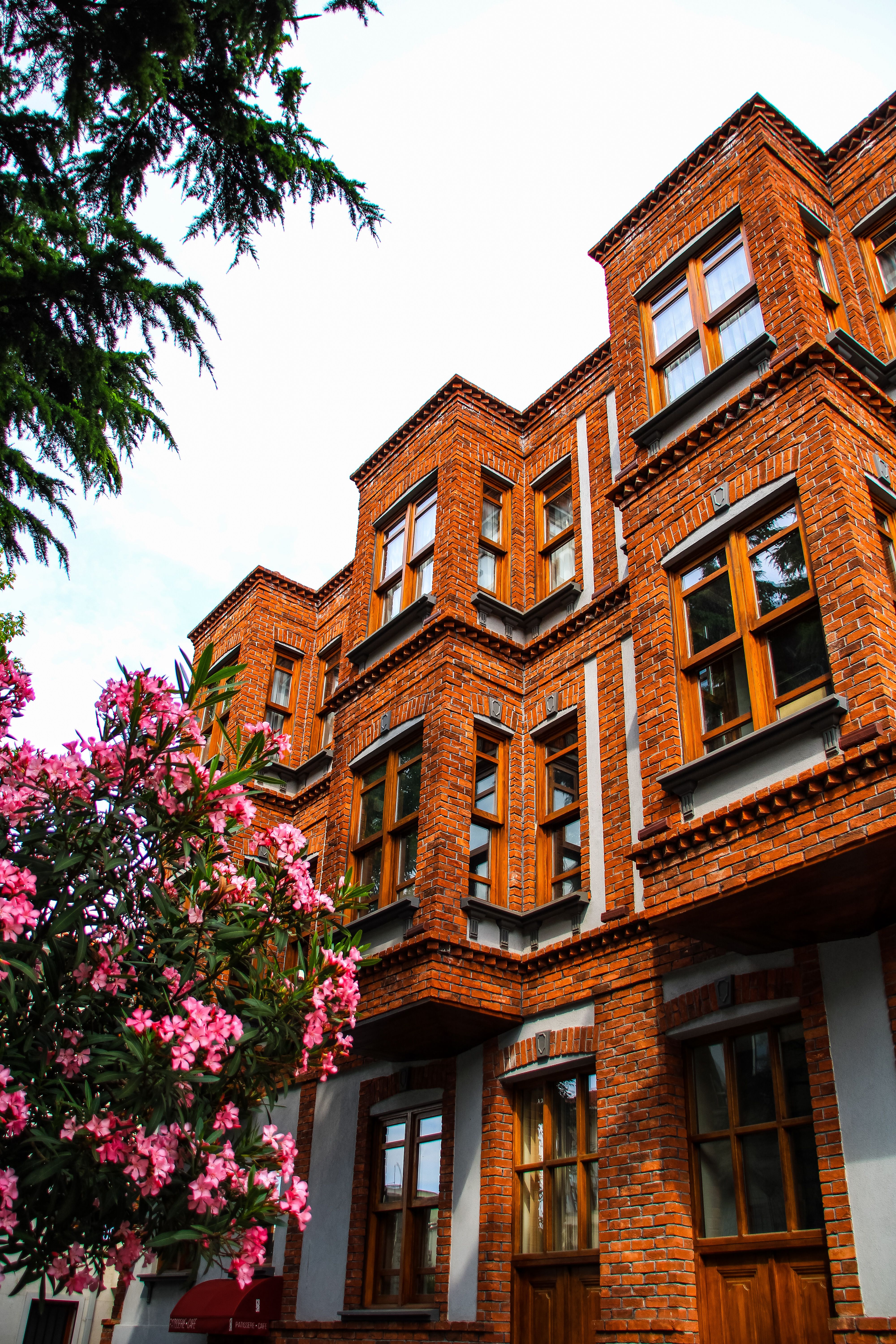
Ghent Square: Norfolk's Planned Community in Ghent
Ghent Square is a planned residential community within Norfolk's historic Ghent District, created through an ambitious redevelopment of the East Ghent area in the 1970s. Known for its brick townhomes and detached houses arranged around landscaped garden greens and a network of private mews and courts, its walkable streets, and its setting beside Stockley Gardens and Colley Avenue, Ghent Square blends the feel of a nineteenth century urban neighborhood with homes built for modern living. This post is part of our guide to the greater Ghent District.
Part of the Greater Ghent District
Ghent Square sits within the larger Ghent District, the collection of neighborhoods just west of downtown Norfolk that also includes historic Ghent and West Ghent. The district takes its name from the Treaty of Ghent, the agreement signed in Ghent, Belgium, in 1814 that ended the War of 1812, and historic Ghent grew up in the 1890s as Norfolk's first planned streetcar suburb. Ghent Square is the newest chapter in that story, and in many ways the most deliberately planned of them all.
Born From Redevelopment
Ghent Square occupies land that was formerly East Ghent, an older section of the Ghent area. By the middle of the twentieth century, much of East Ghent had declined, and in the late 1960s and 1970s the City of Norfolk and the Norfolk Redevelopment and Housing Authority undertook the East Ghent Renewal Project, one of the largest urban renewal efforts of that era in the city.
It is worth telling this part plainly. Like urban renewal projects across the country during those decades, the East Ghent project cleared an established neighborhood and displaced the community that had lived there, a chapter the city and historians have openly reckoned with in the years since. On the cleared and improved land, the Norfolk Redevelopment and Housing Authority partnered with private developers to build a new neighborhood of townhouses, carriage houses, and detached single family homes. That new neighborhood became Ghent Square, and most of its homes date from the late 1970s and the 1980s.
A Planned Community by Design
What sets Ghent Square apart from the historic streets around it is that every part of it was intentional. Rather than replicate a modern subdivision, its planners designed it as a homage to nineteenth century urban neighborhood planning, with brick colonial style townhomes, intimate cul de sac courts, pocket parks, and a central tree lined garden green known as Botetourt Gardens that runs the length of the community.
The layout is the heart of that vision. Ghent Square is a single community of roughly 462 residences, a mix of single family homes, townhomes, and two condominium associations, organized around a set of public streets and a distinctive network of private mews and courts. The public streets include Boissevain Avenue, Botetourt Gardens, Colonial Avenue, DeBree Avenue, Llewellyn Avenue, Mowbray Arch, West Olney Road, West Princess Anne Road, Raleigh Avenue, Shirley Avenue, and Westover Avenue. Branching off them are the intimate private courts and mews that give the neighborhood its character, among them Boissevain Mews, Ferguson Court, Llewellyn Mews, Olney Mews, Pender Court, Van Wyck Mews, Westover Mews, and the four Botetourt Courts and four Mowbray Courts arranged by compass point. These small, tucked away clusters are the design signature of Ghent Square, encouraging the sense of community and privacy its planners set out to create.
A distinctive touch sits at its heart: the Fred Heutte Center, a garden and community building housed in a historic relocated structure that was one of the first buildings moved into the neighborhood as it was developed. Owned by the city, it hosts classes and events and is open to anyone who wants to stroll its gardens. At the community's eastern edge lies Stockley Gardens, the linear park that hosts the twice yearly Stockley Gardens Arts Festival and connects Ghent Square to the rest of Ghent.
National Recognition
The design succeeded on its own terms and drew national attention. In 1991, the Urban Land Institute named Ghent Square the nation's best large scale residential development, recognizing the quality of a plan that wove new construction into the fabric and scale of a historic district.
Life in Ghent Square Today
Ghent Square offers the same walkable, in town lifestyle that defines Ghent as a whole. Residents are minutes on foot from the restaurants, shops, and cafes of Colley Avenue and 21st Street, the Naro Cinema, the Chrysler Museum of Art, and the galleries and murals of the neighboring NEON District, along with nearby local spots such as Cafe Stella and the No Frill Bar and Grill. The Van Wyck branch of the Norfolk Public Library sits on DeBree Avenue, and the region's major medical complex is close by. The Ghent Square Community Association maintains an outdoor pool, tennis and pickleball courts, a clubhouse, and a neighborhood playground known locally as the Tot Lot. A stop on Norfolk's light rail is within walking distance. As with much of the low lying Ghent area, homes closer to the water may fall within a flood zone that requires flood insurance, a practical detail worth checking on any specific property.
A Snapshot of the Market
Ghent Square is a distinctive and tightly held pocket of the Norfolk market, and homes here do not come up often. The neighborhood divides into two segments. A set of condominiums and apartments, many in buildings from the 1980s and 1990s, trades roughly from the high one hundred thousands into the high two hundred thousands. The heart of Ghent Square, its townhomes and detached homes from the late 1970s and 1980s, has recently sold from the low four hundred thousands up to about seven hundred thirty five thousand dollars, with a number of homes closing in the five hundreds and six hundreds and a median in recent months near the high four hundreds. Well presented homes here tend to sell relatively quickly, a reflection of how few become available. For a precise valuation of a specific home, a professional market analysis is the best guide.
Key Facts: Ghent Square at a Glance
Location: A planned community within Norfolk's Ghent District, just west of downtown, between Colonial and Llewellyn Avenues and beside Stockley Gardens
Origins: Built on the former East Ghent, which the City of Norfolk and the Norfolk Redevelopment and Housing Authority cleared and redeveloped through the East Ghent Renewal Project in the late 1960s and 1970s
Design: A planned neighborhood of brick townhomes, carriage houses, and detached homes echoing nineteenth century urban design, arranged around the Botetourt Gardens green, with most homes built in the late 1970s and 1980s
Layout: About 462 residences, including single family homes, townhomes, and two condominium associations, organized around public streets and a network of private mews and courts such as Llewellyn Mews, Van Wyck Mews, Ferguson Court, Pender Court, and the Botetourt and Mowbray Courts
Recognition: Named the nation's best large scale residential development by the Urban Land Institute in 1991
Lifestyle: Walkable to Colley Avenue, the NEON District, the Chrysler Museum, and Stockley Gardens, with the Fred Heutte Center garden at its heart and a community pool, tennis, and pickleball
Market as of 2026: Townhomes and homes have recently sold from the low four hundred thousands to about seven hundred thirty five thousand dollars, with condominiums trading lower
Frequently Asked Questions
Where is Ghent Square in Norfolk?
Ghent Square is a planned community within the Ghent District, just west of downtown Norfolk, roughly between Colonial and Llewellyn Avenues and bordering Stockley Gardens. It sits within walking distance of Colley Avenue and the NEON District.
When was Ghent Square built?
Ghent Square was built primarily in the late 1970s and 1980s. It was created through the East Ghent Renewal Project, a major city redevelopment of the former East Ghent area, and was named the nation's best large scale residential development by the Urban Land Institute in 1991.
How is Ghent Square laid out?
Ghent Square is a single community of roughly 462 residences, including single family homes, townhomes, and two condominium associations. It is organized around public streets such as Botetourt Gardens, Colonial Avenue, Llewellyn Avenue, and Westover Avenue, and a distinctive network of private mews and courts, including Llewellyn Mews, Boissevain Mews, Van Wyck Mews, Westover Mews, Olney Mews, Ferguson Court, Pender Court, and the four Botetourt Courts and four Mowbray Courts.
What kinds of homes are in Ghent Square?
Ghent Square is made up of brick townhomes, carriage houses, and detached single family homes designed to echo nineteenth century urban neighborhoods, arranged around the landscaped Botetourt Gardens green, along with some condominiums and apartments.
How much do homes in Ghent Square cost?
Recently, townhomes and detached homes in Ghent Square have sold from the low four hundred thousands up to about seven hundred thirty five thousand dollars, with condominiums trading from the high one hundred thousands into the high two hundred thousands. Because so few homes come to market here, a professional market analysis is the best way to value a specific property.
Considering this neighborhood? Take a look at what your home here is actually worth, grounded in real deals I have documented start to finish.
Sources
Ghent Square Community Association (ghentsquare.net)
American Planning Association, Great Places in America: Ghent, Norfolk (2018)
Urban Land Institute, 1991 award for large scale residential development
Encyclopedia Virginia, Urban Renewal in Norfolk
City of Norfolk and Norfolk Redevelopment and Housing Authority
Property and market data via the Real Estate Information Network (REIN MLS)
Related guides from John King
Written by John King, Navy veteran & REALTOR®, Berkshire Hathaway HomeServices RW Towne Realty · (757) 270-3994 · About John
