Colonial Place: Norfolk's Historic River Peninsula
Colonial Place is a historic Norfolk neighborhood set on a peninsula that reaches into the Lafayette River, surrounded by water on three sides and known for its colonial themed streets, its picturesque early twentieth century plan, and its rich collection of period homes. Together with the adjoining neighborhood of Riverview, it forms one of the city's earliest and most distinctive streetcar suburbs, and it remains one of Norfolk's most sought after historic districts. This is the next post in our Norfolk waterfront series.
A Peninsula on the Lafayette
Colonial Place occupies a peninsula that juts north into the Lafayette River, the tidal waterway once known as Tanner's Creek. Water defines it: the Lafayette wraps the north and east, Knitting Mill Creek forms the western edge, and East Haven Creek defines the eastern border. Mayflower Road arcs around the shoreline on three sides, tracing a continuous ribbon of riverfront and giving the neighborhood its defining relationship with the water. Just to the west lies Riverview, the slightly older neighborhood with which Colonial Place has long been paired.
The story began at the turn of the twentieth century. In 1902, the City of Norfolk annexed a farming community north of town and slated it for suburban development. Like the other great neighborhoods of the era, Colonial Place depended on the streetcar, and a trolley line tied it to downtown Norfolk. That connection made a riverfront suburb possible on land that had, until then, been open country.
The Jamestown Exposition and a Neighborhood's Name
Colonial Place has one of the most charming origin stories in Norfolk. The neighborhood was platted in 1903 by a development company that first called it Sterling Place. Then came the event that gave it a new name and its entire identity.
In 1907, Norfolk hosted the Jamestown Exposition on the shores of Sewell's Point, a world's fair marking the three hundredth anniversary of the founding of Jamestown. The exposition so captured the developers' imagination that they discarded the name Sterling Place and rechristened the neighborhood Colonial Place. They carried the theme straight into the street signs, naming the east and west running streets for the original thirteen colonies and honoring the colonial captains Newport and Gosnold and the Mayflower itself. Drive the neighborhood today and you are moving through a living map of colonial America, past Pennsylvania, Virginia, New York, Delaware, and Maryland Avenues.
The design was as deliberate as the naming. Rather than impose a monotonous grid, the planners followed the irregular curve of the Lafayette River shoreline, laying out an intricate system of curvilinear streets softened by traffic circles, crescents, and small parks, with a central esplanade and streets lined with large maples. The approach drew directly on the City Beautiful Movement, the influential planning philosophy that emerged from the 1893 Columbian Exposition in Chicago, and its goal was to frame views of the water at every turn.
Growth was slow at first, with only about nineteen homes built between 1903 and 1911 before a building slump set in. What revived the neighborhood was the First World War. When the Norfolk Naval Base rose on the former Jamestown Exposition grounds, the surge of military families created strong demand for housing, and Colonial Place filled in rapidly. Most of the homes standing today were built in the late teens and early 1920s, and the neighborhood earned its place on the National Register of Historic Places in 2001.
The Architecture and the Water
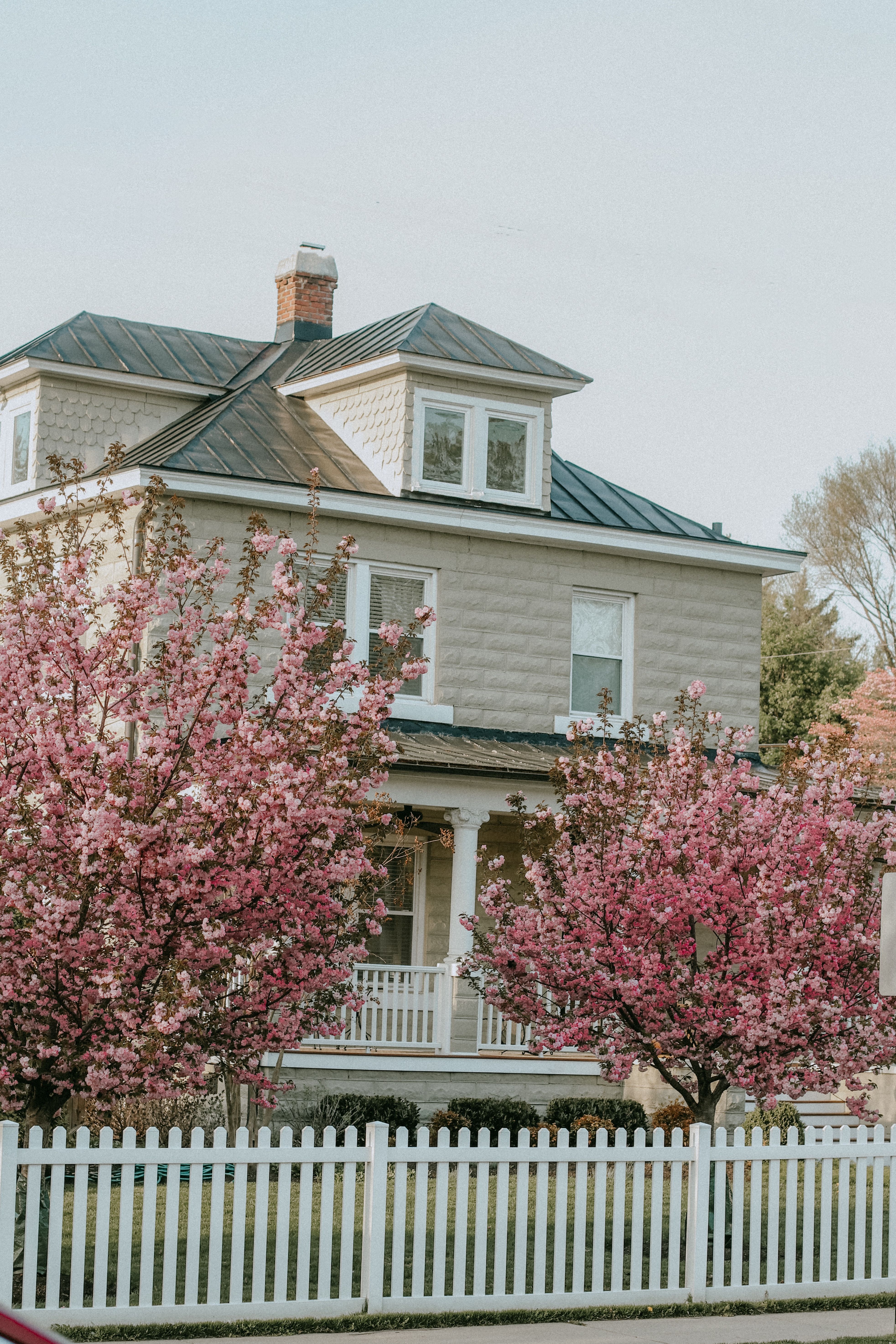
Colonial Place holds one of the richest concentrations of early twentieth century residential architecture in Norfolk. Its streets display an array of period styles, Queen Anne, Colonial Revival, Spanish Mission, Gothic, English Tudor, Jacobean Revival, and Craftsman bungalows among them, ranging from high style landmarks to graceful everyday homes. Nearly a century of history gives the neighborhood a patina that new construction cannot replicate, and the newer infill homes scattered through it have generally been built to respect that established character.
The water is the other half of the appeal. Historic homes sit along the banks of the Lafayette, and Mayflower Road carries walkers, cyclists, and drivers along the water's edge. The peninsula setting makes boating and fishing part of daily life, and small riverfront parks open the water to the whole neighborhood. The Virginia Zoo lies about a mile to the southeast, and the Granby Street corridor offers dining and shopping a short distance away.
The Market in Colonial Place
Colonial Place is one of Norfolk's most desirable historic neighborhoods, and that desirability shows clearly in its sales record. This is not a seven figure luxury enclave. It is something arguably more useful to most buyers and sellers: a beautiful, walkable historic district where distinctive homes are in genuine demand and move quickly.
The heart of the market sits in the three hundred thousands and four hundred thousands, and well kept historic homes have been selling fast and often at or above their asking prices. A 1923 home on Maryland Avenue listed at three hundred fifty nine thousand dollars and sold above ask in a matter of days. A home on Delaware Avenue listed at three hundred eighty five thousand dollars and closed at four hundred five thousand. Time and again, the pattern repeats: a charming, updated home in this neighborhood draws quick, competitive interest.
The upper end of Colonial Place runs into the low to mid six hundred thousands. The top recent sale was a piece of new construction on Virginia Avenue that closed at six hundred forty five thousand dollars, and the highest current listings, including a grand home from 1923 on New York Avenue, are priced in the high five hundreds. The premium here belongs to the larger, architecturally significant homes and the properties closest to the water. True waterfront parcels on the peninsula are scarce and rarely come to market, which is exactly why they hold their value when they do.
What This Means for Sellers
Colonial Place rewards sellers who understand what makes the neighborhood special. Its homes are not interchangeable. A restored Colonial Revival, a Queen Anne with original detail, a Craftsman bungalow, and a piece of respectful new construction each appeal to a different buyer, and the ones that are priced and presented well have been selling quickly, frequently above asking.
That is the opportunity and the nuance. Pricing a distinctive historic home is not a matter of averaging the nearest sales, because character, condition, and location within the neighborhood vary widely from block to block. Reading where a specific home fits, pricing it to the strong demand this neighborhood enjoys, and presenting its history and setting to the right buyers is what produces a fast sale at the best possible number. That is the work a specialist in Norfolk's historic neighborhoods brings to a Colonial Place listing.
Key Facts: Colonial Place at a Glance
Location: A historic neighborhood on a peninsula surrounded on three sides by the Lafayette River in Norfolk, adjoining Riverview, near Old Dominion University and the Virginia Zoo
Origins: One of Norfolk's earliest streetcar suburbs, on land annexed into the city in 1902 and platted in 1903
The name: Originally called Sterling Place, renamed Colonial Place after the 1907 Jamestown Exposition, with east and west streets named for the original thirteen colonies
Design: A picturesque City Beautiful plan of curvilinear streets, traffic circles, a central esplanade, and riverfront parks tracing the shoreline of the Lafayette
Architecture: A rich mix of early twentieth century styles including Queen Anne, Colonial Revival, Spanish Mission, English Tudor, and Craftsman, with most homes built in the late teens and early 1920s
Preservation: Listed on the National Register of Historic Places in 2001
Market as of 2026: A desirable historic district where the heart of the market runs in the three hundreds and four hundreds, homes often sell at or above asking, and the upper end reaches into the mid six hundred thousands
Frequently Asked Questions
Where is Colonial Place in Norfolk?
Colonial Place is a historic neighborhood on a peninsula that extends north into the Lafayette River in Norfolk, surrounded by water on three sides. It adjoins the Riverview neighborhood and sits near Old Dominion University, the Virginia Zoo, and the Granby Street corridor.
Why is it called Colonial Place?
The neighborhood was originally platted as Sterling Place in 1903. After Norfolk hosted the 1907 Jamestown Exposition, celebrating the three hundredth anniversary of Jamestown, the developers renamed it Colonial Place and named its streets for the original thirteen colonies and other colonial themes.
Is Colonial Place a historic district?
Yes. Colonial Place was listed on the National Register of Historic Places in 2001. It is among Norfolk's earliest streetcar suburbs and retains a remarkable concentration of early twentieth century architecture.
How much do homes in Colonial Place cost?
The heart of the Colonial Place market runs in the three hundred thousands and four hundred thousands, with well kept historic homes often selling at or above asking price. The upper end of the neighborhood reaches into the mid six hundred thousands. A professional market analysis is the best way to value a specific home.
What makes Colonial Place desirable?
Its appeal rests on a rare combination: a colonial themed historic district, a picturesque waterfront street plan, significant early twentieth century architecture, and a setting on the Lafayette River. That character is scarce and cannot be recreated, which keeps well presented homes in strong demand.
Want to explore this area with a local agent? See my full home buying process, built on documented case studies of real Hampton Roads transactions.
Sources
National Register of Historic Places, Colonial Place Historic District nomination (2001), Virginia Department of Historic Resources
Colonial Place and Riverview Civic League (cprv.net)
City of Norfolk
The Virginian-Pilot, Colonial Place historic district reporting
Sargeant Memorial Collection, Norfolk Public Library
Closed sales data via the Real Estate Information Network (REIN MLS)
Related guides from John King
Written by John King, Navy veteran & REALTOR®, Berkshire Hathaway HomeServices RW Towne Realty · (757) 270-3994 · About John
